Security is one of the biggest challenges any crypto exchange has to deal with. Whether an exchange is holding millions or billions worth of digital assets, how tightly it locks down private keys can make or break its survival in the long run. It only takes one security slip to wreck customer trust, bring in regulators, and cause real financial losses.
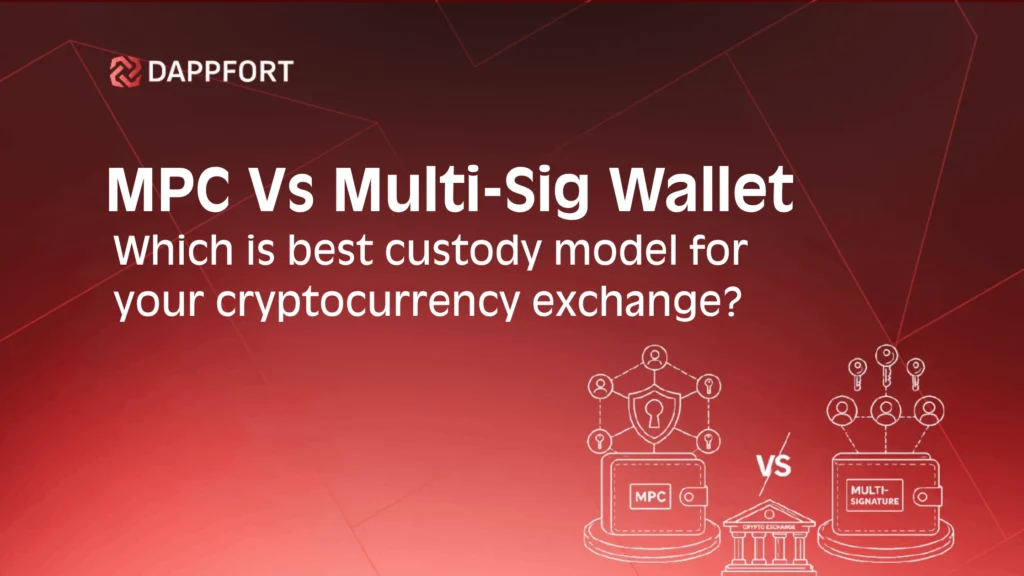
As exchanges scale up and mature, two wallet security models tend to come up again and again in conversations about digital asset custody:
- Multi-Signature Wallets (Multi-Sig)
- Multi-Party Computation (MPC) Wallets
Both are designed to reduce the risk of depending on a single key, just through different methods.
For exchange operators, custody providers, and institutional investors, understanding the difference between MPC wallets and multi-signature wallets matters a great deal when it comes to building exchange infrastructure that’s secure and able to scale.
Quick Answer
If you’re looking for a simple comparison:
Multi-Signature Wallets
- Mature and widely adopted
- Easy to understand
- Strong security model
- Lower implementation complexity
- Suitable for many exchanges
MPC Wallets
- Advanced cryptographic security
- No complete private key exists in one location
- Greater operational flexibility
- Better scalability
- Increasingly preferred by institutional custody providers
For many modern crypto exchanges, MPC is becoming the preferred custody architecture due to its security and operational advantages.
Why Custody Security Matters?
Every exchange faces the same challenge:
How can authorized users move funds freely while everyone else stays locked out?
Most traditional wallets depend on a single private key. That single key becomes a serious point of failure. If it’s compromised, lost, or stolen, customer assets are suddenly at risk. Multi-signature and MPC wallets were both built to solve exactly this issue.
What Is a Multi-Signature Wallet?
A multi-signature wallet calls for multiple approvals before any transaction goes through. Rather than a single key authorizing a transfer, several independent keys need to sign off first.
For example:
2-of-3 Multi-Signature Wallet
Any two out of three key holders must approve.
3-of-5 Multi-Signature Wallet
Any three out of five participants must authorize the transaction.
This structure reduces reliance on a single individual or device.
Benefits of Multi-Signature Wallets
Multi-signature wallets have been used throughout the crypto industry for years.
Improved Security
Attackers must compromise multiple keys rather than one.
Shared Control
No single individual controls customer assets.
Proven Technology
Multi-sig solutions have a long operational history.
Governance Support
Approval workflows tend to fit naturally with internal controls and compliance requirements.
Limitations of Multi-Signature Wallets
Strong as they are, multi-signature wallets come with their own set of challenges.
Operational Complexity
Managing multiple keys can create administrative overhead.
Blockchain Compatibility
Not every blockchain supports multi-signature functionality equally.
Transaction Visibility
Multi-signature transactions can sometimes expose wallet structures on-chain.
Recovery Challenges
Lost or inaccessible keys can make asset recovery a real headache. As exchanges grow, these limitations tend to become more noticeable.
What Is an MPC Wallet?
MPC stands for Multi-Party Computation. Rather than storing one complete private key in a single place, MPC splits cryptographic responsibility across multiple participants.
No single participant ever holds the full key. Instead, parties collaborate mathematically to approve transactions without reconstructing the private key.
This represents a significant evolution in digital asset custody and reflects how modern crypto wallet development focuses on stronger key protection, operational flexibility, and institutional-grade security.
Why MPC Is Gaining Momentum?
Many institutional custody providers now rely on MPC technology.
The reason is simple:
MPC improves security without sacrificing operational efficiency.
Key Advantages
- No complete private key exists
- Reduced single-point-of-failure risk
- Flexible approval workflows
- Better scalability
- Improved user experience
- Cross-chain compatibility
These benefits make MPC attractive for exchanges managing large transaction volumes.
MPC Wallet vs Multi-Signature Wallet: Key Differences
Security
Multi-Signature
Requires multiple private keys. If enough keys are compromised, assets may be exposed.
MPC
The private key is never fully assembled. This reduces exposure to key theft.
Winner: MPC
Operational Flexibility
Multi-Signature
Changes to approval structures may require wallet modifications.
MPC
Policies can often be adjusted more easily.
Winner: MPC
Blockchain Support
Multi-Signature
Support varies by blockchain.
MPC
Works across many blockchain environments.
Winner: MPC
Transparency
Multi-Signature
Approval structures may be visible on-chain.
MPC
Appears similar to a standard transaction.
Winner: MPC
Simplicity
Multi-Signature
Easier to understand and implement.
MPC
Requires more advanced cryptographic infrastructure.
Winner: Multi-Signature
Which Is Better for Crypto Exchanges?
The answer depends on operational requirements.
Multi-Signature May Be Ideal For:
- Smaller exchanges
- Early-stage platforms
- Organizations seeking proven technology
- Simpler governance structures
MPC May Be Ideal For:
- High-volume exchanges
- Institutional platforms
- Enterprise custody providers
- Organizations focused on scalability
Many of today’s leading exchanges are increasingly adopting MPC because it aligns well with the security, scalability, and operational requirements of modern cryptocurrency exchange development.
How Institutional Investors View Custody Models?
Institutional investors pay close attention to custody architecture.
Before selecting an exchange or custody provider, they often evaluate:
- Key management controls
- Security governance
- Operational resilience
- Recovery procedures
- Regulatory readiness
MPC solutions are gaining traction among institutional participants because they address many concerns associated with traditional key management. However, multi-signature wallets continue to play an important role in many custody environments.
Best Practices for Choosing a Custody Solution
When evaluating custody technologies, exchanges should consider:
Security Requirements
How effectively does the solution reduce key-management risk?
Scalability
Can it support future growth?
Operational Efficiency
Does it improve workflows without introducing unnecessary complexity?
Compliance Support
Can it integrate with governance and audit requirements?
Disaster Recovery
How does the platform handle failures and recovery scenarios?
The best custody solution is the one that balances security, usability, governance, and long-term scalability.
The Future of Exchange Custody
The custody landscape continues to evolve. As exchanges attract institutional capital and face increasing security expectations, advanced custody models will become more common.
Emerging trends include:
- MPC-based custody platforms
- Hybrid custody architectures
- Automated approval workflows
- Zero Trust Security integration
- Enhanced governance controls
Organizations that invest in modern custody infrastructure today will be better positioned to meet tomorrow’s security and compliance expectations.
Conclusion
The debate between MPC wallets and multi-signature wallets isn’t really about crowning a universal winner. Both technologies offer a major security upgrade over single-key wallet models. Multi-signature wallets remain a proven, effective solution for plenty of organizations.
MPC wallets, on the other hand, bring advantages in flexibility, scalability, and advanced key protection that are increasingly drawing in institutional investors and large-scale exchanges.
For exchanges shaping long-term custody strategies, the choice should come down to business objectives, security requirements, operational complexity, and where the organization is headed in terms of growth.
The strongest custody architectures tend to be the ones where security controls actually match the realities of modern digital asset operations.
Build a Crypto Exchange That Institutions Trust
Design your exchange with enterprise-grade custody architecture, MPC wallet integration, multi-signature security, and advanced private key management. Dappfort helps you build scalable cryptocurrency exchanges with security at the core.
Frequently Asked Questions
What’s the real difference between MPC and multi-signature wallets?
With multi-signature wallets, several different keys have to sign off before a transaction can move forward. MPC wallets take a different approach they split the cryptographic process across multiple parties so that no single, complete private key ever exists in one place.
Are MPC wallets safer than multi-signature wallets?
Both offer strong security. MPC tends to add an extra layer of protection by removing the need to ever store a full private key anywhere.
Why are crypto exchanges adopting MPC?
MPC improves scalability and operational flexibility, and strengthens key security, all while supporting institutional-grade custody needs.
Do institutional investors prefer MPC wallets?
A lot of institutional custody providers are leaning toward MPC because it fits modern security and governance expectations.
Can MPC replace cold storage?
MPC and cold storage serve different purposes, and they’re often used together as part of a broader custody setup.
Related Readings:
- Crypto Exchange Custody Architecture: Hot Wallets, Cold Storage & MPC Security
- Multi-Signature Wallet Infrastructure for Crypto Exchanges: Building a Secure Custody Framework
- How Secure Crypto Wallets Are Built: Security Architecture Explained
- Hot Wallet vs Cold Wallet for Crypto Exchanges: Security & Compliance Guide