In the early days of cryptocurrency, many exchanges were focused almost entirely on growth. User acquisition, trading volume, and new asset listings took priority over governance and risk controls.
Today’s market looks very different.
Crypto exchanges now sit in a space where cybersecurity threats, regulatory pressure, operational failures, and liquidity problems can quickly shake customer trust and hurt business performance.
For exchange operators serving U.S. customers, risk management isn’t something you handle quietly in the back office anymore. It has become a core part of how a business actually runs.
A well-structured risk management framework helps exchanges catch threats early before they turn into real problems, keeps operations steady through disruptions, protects what customers have on the platform, and gives the business room to grow without things falling apart.
The most successful exchanges aren’t always the ones with the most features. More often they’re the ones that stay on top of risk without letting it get in the way of running a clean and efficient operation.
What Is a Crypto Exchange Risk Management Framework?
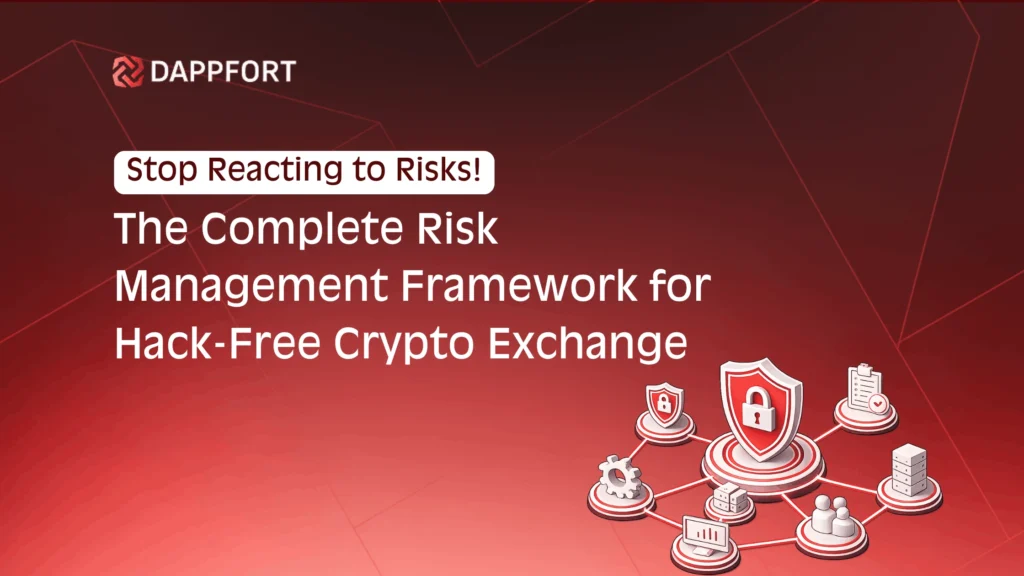
A crypto exchange risk management framework is a structured approach to identifying, assessing, mitigating, monitoring, and responding to risks that could affect the exchange, its customers, or its assets.
The framework gives teams a repeatable process for handling risk across different parts of the business.
These areas typically include:
- Cybersecurity
- Custody and asset protection
- Regulatory compliance
- Operational processes
- Liquidity management
- Third-party vendors
- Business continuity
Rather than waiting for problems to show up, exchanges use risk management frameworks to get ahead of potential threats before they start disrupting things.
Why Risk Management Has Become a Competitive Advantage?
Customers today expect more than just a trading platform.
They want to know their assets are safe, their data isn’t getting compromised, and the exchange can hold up even when markets get rough. Institutional investors have pushed that bar even higher.
Before they even think about joining a platform, many institutions look closely at:
- Security architecture
- Custody controls
- Governance practices
- Operational resilience
- Compliance readiness
- Incident response capabilities
Strong risk management can help exchanges:
- Build customer trust
- Bring in institutional clients
- Cut down on security incidents
- Stay ahead on regulatory requirements
- Keep their reputation intact
- Grow without constantly putting out fires
In a lot of cases, how well an exchange handles risk ends up being what sets it apart from the rest.
The Five Core Risk Categories Every Exchange Must Manage
Leading exchanges typically focus on five major risk categories.
1. Security Risk
Security is still one of the biggest challenges in the digital asset space. Threat actors keep going after exchanges because they hold large amounts of cryptocurrency and sensitive customer data.
Common security risks include:
- Account compromise
- Phishing attacks
- Insider threats
- Wallet exploits
- Credential theft
- Infrastructure attacks
Dealing with security risk properly means layering up protections instead of leaning on just one technology.
Key controls often include:
- Multi-factor authentication
- Zero Trust security
- Network segmentation
- Continuous monitoring
- Threat intelligence
- Security awareness training
2. Compliance and Regulatory Risk
Regulatory expectations keep shifting, both across the U.S. and in other markets around the world. Exchanges have to keep up with those changes while still staying flexible in how they operate.
Compliance risks may include:
- AML violations
- KYC deficiencies
- Reporting failures
- Data protection issues
- Recordkeeping gaps
A solid compliance program should cover:
- Ongoing risk assessments
- Regulatory monitoring
- Internal audits
- Policy management
- Employee training
Exchanges that treat compliance as something ongoing, and not just a box to tick once, tend to handle regulatory shifts a lot better.
3. Operational Risk
Not every disruption comes from a cyberattack. A lot of incidents, instead, come down to process failures, human error, or systems breaking down.
Operational risks may involve:
- Service outages
- Transaction processing failures
- Software deployment errors
- Inadequate procedures
- Resource constraints
Exchanges that run well tend to reduce operational risk by putting in place:
- Documented workflows
- Segregation of duties
- Change management processes
- Disaster recovery plans
- Business continuity programs
As exchanges grow bigger, keeping operations stable has become more important.
4. Liquidity Risk
Liquidity is what keeps an exchange on steady ground. When markets get volatile, exchanges often see a spike in withdrawals and trading activity at the same time, and weak liquidity management can cause serious problems quickly.
Key considerations include:
- Reserve management
- Treasury oversight
- Capital planning
- Stress testing
- Withdrawal capacity
Exchanges that know what they’re doing regularly run through liquidity scenarios and keep backup plans ready for when markets get rough.
5. Third-Party and Vendor Risk
Most exchanges depend on outside providers for services that are critical to how they run.
Examples include:
- Cloud infrastructure
- Custody solutions
- Payment providers
- Analytics platforms
- Security vendors
These partnerships bring real value, but risk comes along with them too. A problem with one vendor can ripple out and affect the exchange’s operations, security, or compliance standing.
Keeping vendor risk under control means having:
- Due diligence reviews
- Security assessments
- Contract oversight
- Ongoing monitoring
Third-party risk needs to be treated as part of the exchange’s wider risk management approach, not handled separately.
Building a Risk Management Culture
Technology on its own can’t build a strong risk management program. Culture plays a big role too, and exchanges with mature risk programs get people at every level thinking about risk as part of how they work day to day.
That means:
- Flagging issues early
- Sticking to documented procedures
- Showing up for training
- Knowing what their security responsibilities actually are
Risk management works a lot better when it’s woven into how the whole organization operates, rather than sitting in one department on its own.
The Role of Custody in Risk Management
Custody architecture sits at the center of protecting customer assets.
Most exchanges rely on a layered custody model, combining:
- Hot wallets
- Cold storage
- Multi-signature controls
- MPC technology
- Transaction monitoring
This approach cuts down exposure while keeping operations running efficiently.
When evaluating custody controls, exchanges should look at:
- Asset segregation
- Key management
- Access controls
- Recovery procedures
- Auditability
Solid custody practices go a long way toward reducing both security and operational risk.
Why Leading Exchanges Invest in Continuous Monitoring?
Risk management isn’t something you check on once a quarter. Threats evolve continuously.
Leading exchanges use real-time monitoring to detect:
- Unusual account activity
- Infrastructure anomalies
- Suspicious transactions
- Access control violations
- Security incidents
With continuous monitoring in place, organizations can catch risks and respond before they spiral. The sooner an issue gets flagged, the smaller the damage tends to be.
Incident Response: Preparing for the Unexpected
Even mature, well-run organizations run into incidents. What separates the exchanges that recover well from the ones that don’t is how they handle the response.
A strong incident response program usually covers:
Defined Roles and Responsibilities
Every team member should know exactly what’s expected of them when something goes wrong.
Communication Plans
Internal and external communication needs to be written down and actually tested, not just assumed.
Investigation Procedures
Teams need a structured way to dig into what happened and why.
Recovery Planning
Recovery plans should put business continuity and customer protection first. Being prepared ahead of time can cut downtime and financial damage considerably.
Best Practices Used by Leading Crypto Exchanges
The most resilient exchanges tend to share a handful of traits.
They Treat Security as a Business Priority
Security decisions receive executive-level attention.
They Invest in Governance
Risk management gets continuous oversight, with clear accountability built in.
They Continuously Assess Risk
Risk gets reassessed on a regular schedule, not just triggered by the last incident.
They Build for Scale
Controls and processes are designed with future growth in mind from the start, which is usually a sign the platform was built by a team offering proper crypto exchange development services rather than stitched together after the fact.
They Prioritize Customer Trust
Protecting customer assets stays at the heart of every operational decision. These principles are what let organizations build something durable and resilient over the long run.
Looking Ahead: The Future of Exchange Risk Management
As digital asset markets grow more mature, the bar for solid risk management keeps rising along with them.
Emerging priorities include:
- Zero Trust security
- Advanced threat detection
- Automated compliance monitoring
- AI-assisted risk analysis
- Institutional-grade custody controls
- Enhanced governance frameworks
Exchanges that invest in stronger risk management now will have a real edge competing later.
One Risk Can Break Trust. The Right Exchange Won’t Let It
Build a crypto exchange that is secure, compliant, and prepared for the challenges of tomorrow. Dappfort helps businesses launch resilient trading platforms with enterprise-grade security, robust risk controls, and infrastructure designed for long-term growth.
Conclusion
Cryptocurrency exchanges can no longer treat risk management as a box to check — it’s now a core part of staying in business. Everything from security and regulatory compliance to day-to-day operations and customer trust depends on getting it right.
The exchanges that do this well aren’t chasing the impossible goal of zero risk. Instead, they focus on spotting problems before they spiral, measuring exposure honestly, keeping a close eye on what’s happening, and responding with real discipline when something goes wrong.
Having a clear, structured approach gives exchanges a genuine way to reduce vulnerabilities, earn credibility, and build operations that hold up even as crypto markets grow more complex and unpredictable.
Frequently Asked Questions
What is a crypto exchange risk management framework?
It’s an organized method for spotting, evaluating, reducing, and keeping tabs on risk covering everything from cybersecurity and compliance to daily operations, liquidity, and third-party vendors.
Why does risk management matter for crypto exchanges?
Because it safeguards customer funds, keeps operations running under pressure, reduces the chance of regulatory trouble, and earns the confidence of both regular users and institutional players.
What are the most serious risks crypto exchanges face?
Cyberattacks, compliance gaps, operational breakdowns, liquidity crunches, and problems tied to external vendors consistently sit at the top of that list.
How do exchanges protect themselves from security threats?
By stacking multiple defenses — things like Zero Trust architecture, cold storage, multi-factor authentication, round-the-clock monitoring, and a solid incident response plan. No single measure is enough on its own.
Why does custody matter in risk management?
Custody is how exchanges actually protect what customers have deposited. That means secure wallet handling, tight control over private keys, strict access policies, and proper authorization steps before any transaction goes through.
How often should exchanges perform risk assessments?
Regularly, and again whenever something meaningful changes — operationally, technically, or regulatory-wise.
Related Readings:
- Crypto Exchange Custody Architecture
- Hot Wallet Vs Cold Wallet for Crypto Exchanges
- Crypto Exchange Compliance Guide