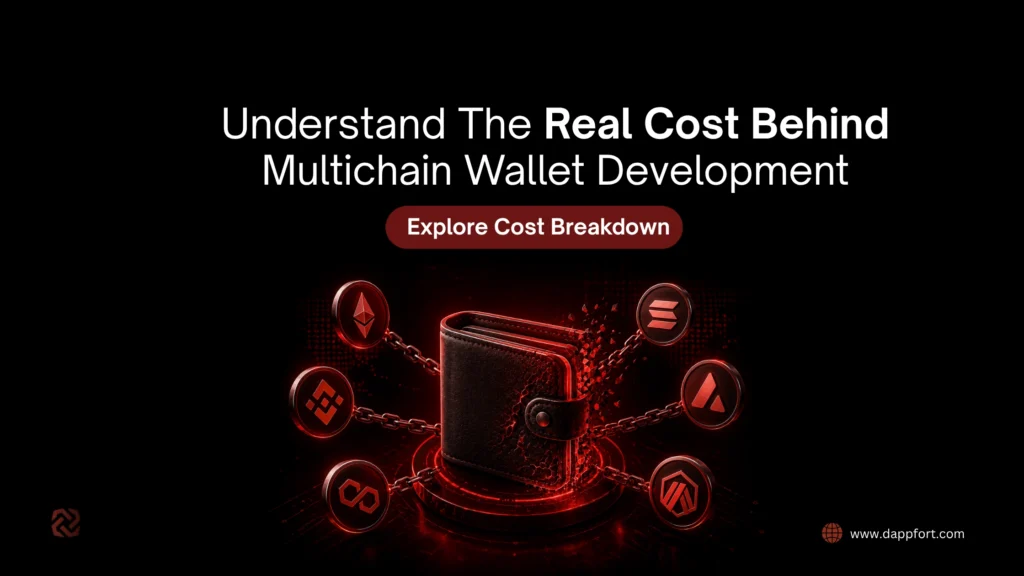
A few years ago, building a crypto wallet mainly meant creating a secure way to send and store tokens. That is no longer enough. In 2026, wallets are no longer simple storage applications.
The cost of developing a multichain crypto wallet in 2026, can range from approximately $25,000 to over $400,000 depending on the number of blockchain integrations, wallet security architecture, Web3 onboarding, multi-network DeFi access, embedded KYC/AML compliance, Supported platforms, compliance requirements, and custom functionality.
This wide gap reflects how dramatically wallet platforms have evolved across the Web3 ecosystem. Today’s wallets support cross-chain transactions, staking, DeFi integration, NFT storage, institutional custody, and advanced compliance systems.
As competition and security expectations increase, the multichain wallet development cost is becoming closely tied to scalability, cybersecurity, and long-term platform architecture.
For crypto startups, this topic has become especially important. Investor expectations have changed dramatically after multiple exchange collapses and high-profile wallet exploits over the past few years. Every wallet startup nowadays prioritises security architecture, compliance readiness, and scalability before launch speed. That means budgeting decisions are becoming more strategic than ever.
Businesses looking for scalable Web3 infrastructure often rely on multichain wallet development services, especially when projects require custom architecture, enterprise-level security, or support for multiple blockchain ecosystems.
What Is a Multichain Wallet?
A multichain crypto wallet allows users to manage assets across multiple blockchain networks inside a single interface.
Popular chain integrations include:
- Bitcoin
- Ethereum
- Solana
- BNB Chain
- Polygon
- Avalanche
- Arbitrum
- Base
- Tron
- Cosmos
Examples include: MetaMask, Trust Wallet, Phantom, Exodus
How much does multichain wallet development cost average?
Understanding the overall crypto wallet development cost helps startups plan budgets more effectively before selecting specific blockchain integrations and features.
| Wallet Type | Estimated Cost Range | Development Timeline |
| Basic Single-Chain Wallet | $15,000 – $40,000 | 1–3 Months |
| MVP Multichain Wallet | $40,000 – $90,000 | 3–5 Months |
| Advanced DeFi Wallet | $90,000 – $180,000 | 5–8 Months |
| Enterprise Wallet Platform | $180,000 – $400,000+ | 8–14 Months |
| White-Label Wallet | $10,000 – $60,000 | 2–8 Weeks |
These numbers reflect current blockchain engineering rates and enterprise security expectations in the global market. Businesses targeting American users generally spend more because they must consider compliance systems, cybersecurity standards, and investor-grade infrastructure from the beginning.
Key Factors That Affect Multichain Wallet Development Cost Most:
The biggest cost drivers are:
- number of blockchain networks
- custom wallet features
- security architecture
- mobile and web platform support
- compliance integrations
- scalability requirements
1. Number of Blockchain Integrations
The biggest cost multiplier is the number of supported chains.
Every blockchain requires:
- Separate node integration
- Different transaction logic
- Unique fee calculations
- Wallet address handling
- API synchronization
- Chain-specific testing
A few years ago, many wallets only supported one blockchain. That kept development relatively straightforward. Engineers only had to manage one transaction system, one network structure, and one set of APIs. That is no longer the case.
Today, users expect one wallet to work across Ethereum, Solana, Bitcoin, Polygon, Base, Avalanche, and other ecosystems without friction. Every blockchain behaves differently under the hood, and each integration adds more engineering complexity than most founders initially expect.
Ethereum-compatible chains are usually easier because they share similar standards. Bitcoin is completely different. Solana introduces its own transaction logic and performance architecture. Cosmos-based ecosystems require another approach entirely.
Every additional chain means:
- more backend logic
- more testing
- more security review
- more maintenance later
That complexity compounds quickly.
| Blockchain Support | Estimated Additional Cost |
| EVM-Compatible Chain | $3,000 – $8,000 |
| Bitcoin Integration | $8,000 – $20,000 |
| Solana Integration | $10,000 – $25,000 |
| Cosmos Ecosystem | $12,000 – $30,000 |
| Cross-Chain Bridge Support | $20,000 – $70,000 |
One thing many startups learn late is that adding chains later can sometimes cost more than planning them correctly from the beginning. That is why architecture decisions made during the early stages matter so much.
Recent wallet architecture reports note that each new Layer-1 integration substantially increases backend engineering and QA complexity.
Teams like Dappfort focus heavily on scalable multichain architecture because rebuilding wallet infrastructure after launch is usually far more expensive than doing it correctly upfront.
2. Feature Complexity Impacts Cost More Than Most Startups Expect
Simple wallets are far cheaper than feature-rich DeFi ecosystems.
Basic Wallet Features
- User registration
- Seed phrase management
- Send/receive crypto
- QR code support
- Transaction history
A wallet that only sends and receives crypto is relatively inexpensive to build. The moment DeFi functionality enters the picture, budgets start changing very quickly.
Users now expect features like:
- Instant Token swaps
- NFT support
- Staking
- WalletConnect
- dApp browser access
- Fiat payment integration
- Push notifications
- Biometric login
None of these are “small additions.”
For example, fiat on-ramp integration often requires KYC systems, banking APIs, compliance workflows, fraud prevention layers, and regional payment handling. NFT support requires indexing systems and metadata management. Token swap functionality introduces liquidity routing and pricing logic.
Every feature adds infrastructure underneath it.
| Feature | Estimated Cost Impact |
| Token Swaps | +$10K – $40K |
| NFT Support | +$8K – $30K |
| DeFi Staking | +$15K – $60K |
| Fiat On/Off Ramp | +$20K – $80K |
| WalletConnect Integration | +$5K – $15K |
| MPC Wallet Security | +$40K – $120K |
| Hardware Wallet Compatibility | +$10K – $35K |
| AI Fraud Detection | +$20K – $70K |
The biggest shift happening in 2026 is that users no longer compare crypto wallets against other wallets. They compare them against mainstream fintech apps. That expectation changes everything about development standards. Enterprise-grade wallets with staking, governance, and cross-chain routing require significantly larger budgets than MVP wallets
3. Platform Choice (iOS, Android, Web) Quietly Double the Budget
Supporting multiple platforms can nearly double development effort. One mistake founders make is assuming mobile development is one single task. In reality, iOS, Android, browser extensions, and web dashboards all require separate engineering work. Even when cross-platform frameworks are used, optimization and testing still consume a large amount of development time. This becomes especially important for crypto startups because desktop browser wallets are still heavily used for DeFi and NFT activity.
A company may start with a mobile-only strategy and later realize users also expect:
- Chrome extension support
- desktop synchronization
- browser-based dApp connectivity
That expansion increases both cost and timeline.
| Platform | Estimated Development Cost |
| Web Wallet | $15K – $60K |
| iOS Wallet App | $20K – $80K |
| Android Wallet App | $20K – $80K |
| Browser Extension | $15K – $50K |
Some startups reduce early costs by launching with one primary platform first. Others prefer a broader launch strategy from day one depending on funding and target audience.
Security Cost Is Now One of the Largest Expenses
Security is now a mandatory budget category — especially for wallet targeting investors or enterprise users. There was a time when startups treated security audits as optional. That mindset disappeared after repeated wallet exploits and bridge hacks across the crypto industry. In 2026, security is no longer viewed as a final-stage checkbox. It is part of the product itself.
Users want to know:
- how keys are stored
- how transactions are verified
- whether the wallet has been audited
- what happens if a device is compromised
This is especially true in the U.S. market where trust directly affects adoption. Many newer wallets are now shifting toward MPC (Multi-Party Computation) systems because traditional seed phrase models continue creating security and usability problems for mainstream users.
But stronger security also means higher development cost.
| Security Component | Estimated Cost |
| Smart Contract Audit | $15K – $80K |
| Penetration Testing | $5K – $25K |
| Infrastructure Security | $10K – $40K |
| MPC Architecture | $30K – $100K |
| Compliance Review | $10K – $50K |
This is one reason experienced blockchain development partners matter.
Companies like Dappfort Cryptocurrency Wallet Development Company position security architecture as part of the foundation rather than an afterthought added before launch.
White-Label vs Custom Wallet Development: Which Is Better?
The decision between white-label and custom development usually comes down to timeline, ownership, and long-term scalability.
White-label wallets are faster and cheaper because much of the infrastructure already exists. A startup can customize branding and launch relatively quickly without building everything from scratch. White-label solutions often launch within 2–8 weeks.
That approach works well for:
- MVP validation
- Early fundraising
- Testing market demand
But there are trade-offs.
White-label solutions often limit flexibility later. Some businesses eventually discover they cannot scale features the way they originally planned. Others become dependent on external vendors for upgrades or infrastructure support.
Custom wallet development costs more initially, but it gives companies full control over the product, security stack, integrations, and future expansion.
| Development Type | Typical Cost |
| White-Label Wallet | $10K – $80K |
| Fully Custom Wallet | $80K – $400K+ |
Startups planning long-term ecosystem growth usually move toward custom infrastructure sooner or later. Custom wallet infrastructure becomes financially attractive at higher transaction volumes because businesses avoid recurring vendor fees.
That is why many Web3 companies choose providers like Dappfort Web3 Wallet Development Services when scalability and custom functionality are priorities from the beginning.
Is White-Label or Custom Better for your business goals?
Choose White-Label If:
- You need fast launch
- Budget is under $80K
- You are validating the market
- Features are relatively standard
Choose Custom Development If:
- You want full ownership
- You need institutional-grade security
- You expect high transaction volume
- You require advanced DeFi functionality
Full Multichain Wallet Development Cost for crypto startups:
| Cost Component | Estimated Budget |
| UI/UX Design | $5K – $25K |
| Blockchain Integrations | $10K – $120K |
| Backend Development | $15K – $80K |
| Mobile App Development | $20K – $100K |
| Web Dashboard | $10K – $40K |
| Security Audits | $15K – $100K |
| QA & Testing | $5K – $30K |
| Cloud Infrastructure | $2K – $15K/year |
| Compliance & KYC | $10K – $50K |
| Maintenance | 15–25% annually |
Hidden Costs That Most Crypto Startups Ignore
The launch budget is only part of the real expense. Operating a multichain wallet long term introduces recurring infrastructure costs many founders underestimate early on.
That includes:
- blockchain node access
- cloud hosting
- analytics infrastructure
- transaction monitoring
- third-party APIs
- security patching
- compliance updates
As user volume grows, infrastructure costs rise with it. Another hidden expense is maintenance. Wallets require constant updates because blockchain ecosystems evolve continuously. A wallet built today will still need engineering work months after launch just to remain compatible with changing protocols and security standards. The projects that scale successfully are usually the ones that plan operational costs early instead of focusing only on initial development pricing.
Multichain Wallet Development Team Cost by Region
| Region | Hourly Rate |
| USA | $100 – $250/hr |
| Western Europe | $70 – $180/hr |
| Eastern Europe | $50 – $120/hr |
| India | $25 – $70/hr |
How Dappfort Typically Budget Multichain Wallet Projects?
Startup MVP Budget
$10K – $25K
Usually includes:
- 2–3 chains
- Mobile app
- Basic DeFi support
- White-label customization
Growth-Stage Wallet
$25K – $50K
Usually includes:
- Cross-chain swaps
- NFT support
- Browser extension
- Compliance tooling
- Advanced analytics
Enterprise Wallet Infrastructure
$100K – $250K+
Usually includes:
- MPC architecture
- Institutional custody
- Regulatory modules
- Banking integrations
- Advanced monitoring
Recommended Tech Stack for Multichain Wallets
- Frontend for Web/Mobile App: React, React Native, Flutter
- Backend: Node.js, Go, Rust
- Blockchain Infrastructure: Infura, Alchemy,QuickNode
- Security: Fireblocks, MPC frameworks,Hardware security modules
Final Thoughts
The real multichain wallet development cost 2026 depends less on coding hours and more on product ambition. A lightweight MVP for testing an idea may stay under six figures. A serious multichain wallet competing in the U.S. market usually requires a much larger investment because expectations around security, interoperability, and user experience have changed dramatically.
The biggest factors affecting cost are:
- Number of blockchain integrations
- Security architecture
- Platform coverage
- DeFi functionality
- Compliance requirements
- Scalability planning
- White-label vs custom development approach
For founders entering the market in 2026, cutting corners early often creates larger expenses later.
That is one reason companies increasingly work with specialized blockchain engineering firms like Dappfort Multichain Wallet Development Company when building long-term Web3 infrastructure. Experience in cross-chain architecture, wallet security, and scalable blockchain systems can significantly reduce technical debt as the platform grows.
Ready to Build a Powerful Multichain Wallet for your Crypto Business?
From blockchain integrations and advanced security features to custom functionality and scalable architecture, every element impacts development cost and long-term success. Dappfort helps businesses create secure, high-performance multichain wallet solutions designed for growth, user trust, and future scalability.
FAQ
How much does it cost to build a wallet like MetaMask?
A wallet similar to MetaMask with multichain support, browser extension compatibility, token swaps, and DeFi integrations usually costs between $80,000 and $250,000+, depending on features and security requirements.
What is the cheapest way to launch a multichain wallet?
White-label wallet solutions are usually the lowest-cost option for startups that want to enter the market quickly without building infrastructure from scratch.
Why is wallet security so expensive?
Crypto wallets handle direct asset custody. Because of that, they require audits, penetration testing, secure key management systems, and infrastructure hardening to reduce the risk of exploits or theft.
Is custom wallet development better than white-label solutions?
Custom wallets provide more flexibility, ownership, and scalability. White-label platforms are faster to launch but may create limitations later as the business grows.
Which blockchains should a new wallet support first?
Most startups prioritize Ethereum, Bitcoin, Polygon, Solana, and BNB Chain because these ecosystems still dominate user activity across DeFi, NFTs, and Web3 applications.