Introduction
Launching a crypto wallet without a proper development process is one of the quickest ways to fail in the blockchain space.
A crypto wallet isn’t like a regular app. It’s a critical financial system it handles real money, private keys, and blockchain transactions that can’t be undone once sent. Any weakness in the architecture, security, or execution can lead to lost funds, damaged reputation, or regulatory issues.
That’s exactly why leading blockchain engineering firms such as Dappfort approach crypto wallet development as a formal system engineering lifecycle, rather than treating it like ordinary software development.
This article looks at why the crypto wallet development process matters so much for a successful launch, and how structured engineering ends up deciding whether a product survives or fails in the competitive blockchain space.
What is the Crypto Wallet Development Process?
The crypto wallet development process is a structured engineering lifecycle used to design, build, test, and deploy a digital wallet one that allows users to securely store, send, and receive cryptocurrencies and other digital assets.
It includes multiple layers:
- Product strategy and architecture planning
- Blockchain network selection
- Security system design
- Backend and frontend development
- Smart contract integration
- Testing and validation
- Deployment and scaling
A properly executed process ensures that the wallet is not just functional, but also:
- Secure against cyberattacks
- Scalable for millions of users
- Compliant with regulations
- Optimized for user experience
- Future-ready for Web3 expansion
Why Crypto Wallet Development Process Matters?
A well-structured crypto wallet development process establishes a strong security foundation by protecting private keys, securing transactions, and eliminating vulnerabilities throughout every stage of development.
1. It Defines the Security Foundation of the Entire Product
Security is the most critical component of any crypto wallet. Unlike traditional applications, blockchain transactions cannot be reversed. A single vulnerability can lead to irreversible financial loss.
Without a structured development process, common security failures include:
- Weak private key generation mechanisms
- Poor encryption implementation
- Vulnerable API endpoints
- Unsafe transaction signing logic
- Lack of secure key storage architecture
A proper development process ensures:
- Cryptographically secure key generation
- Secure enclave or MPC-based key storage
- End-to-end encrypted communication
- Multi-layer authentication systems
- Continuous vulnerability assessment
At Dappfort, security is not a final step, it is embedded into every phase of development.
2. It Enables Scalable Multi-Chain Architecture
Modern crypto wallets are expected to support multiple blockchain networks. Users demand seamless access to Bitcoin, Ethereum, stablecoins, NFTs, and Layer 2 ecosystems.
Without proper planning, scalability issues arise:
- Network congestion failures
- Slow transaction processing
- High gas fee inefficiencies
- Inability to integrate new chains
A structured development process ensures:
- Modular blockchain integration layer
- Support for Ethereum, Bitcoin, Polygon, BSC, and Layer 2 networks
- Scalable node infrastructure
- Optimized transaction routing systems
This architecture allows wallets to evolve as the blockchain ecosystem grows.
3. It Reduces Time-to-Market Without Compromising Quality
Many startups rush wallet development just to launch fast. This usually backfires leading to technical debt, security gaps, and rebuilds down the line.
A structured process helps teams move efficiently by:
- Setting clear development milestones
- Allowing engineering teams to work in parallel
- Cutting down on rework and architecture rewrites
- Making sure testing happens alongside development, not after
Rather than rushing to launch, companies end up with something stable, controlled, and actually ready for production.
4. It Ensures Regulatory Alignment (Critical for USA Market)
For businesses targeting the United States, compliance is not optional, it is a fundamental requirement.
A crypto wallet development process integrates:
- KYC (Know Your Customer) verification systems
- AML (Anti-Money Laundering) monitoring tools
- Transaction tracking and reporting systems
- Custodial vs non-custodial classification frameworks
- Data privacy compliance systems
Failure to integrate compliance early can result in:
- Regulatory penalties
- Banking restrictions
- Exchange integration rejection
- Business shutdown risks
A structured process ensures compliance is built into the architecture not added later.
5. It Builds User Trust Through Predictable System Behavior
Trust is the most valuable asset in crypto applications.
Users expect:
- Transparent transactions
- Accurate fee calculations
- Fast and reliable confirmations
- Secure onboarding processes
- Clear error handling
Without structured development, wallets often suffer from:
- UX inconsistencies
- Transaction failures
- Confusing interfaces
- Loss of user confidence
A disciplined development process ensures:
- Predictable UI/UX flows
- Secure onboarding experience
- Real-time transaction updates
- Error-free execution logic
Trust is not designed at the end, it is engineered from the beginning.
6. It Enables Robust Security Testing and Threat Simulation
Crypto wallets must be tested like banking systems, not consumer apps.
A proper development process includes:
- Penetration testing
- Smart contract auditing
- Load testing under high transaction volumes
- Simulation of attack scenarios
- Node failure recovery testing
Common attack vectors tested:
- Private key leakage attempts
- Replay attacks
- Man-in-the-middle interception
- API exploitation
- Blockchain reorganization attacks
Without structured testing, vulnerabilities are often discovered after deployment which is catastrophic in financial systems.
7. It Ensures Long-Term Maintainability and Product Evolution
Crypto wallets don’t remain static they need to keep pace with blockchain technology as it develops.
A structured development process makes room for:
- Continuous feature upgrades (staking, swaps, DeFi integration)
- Expanding across multiple chains without a full redesign
- A pipeline for handling security patches
- Ongoing performance enhancements
- Support for emerging Web3 protocols
That’s what keeps the wallet competitive as the ecosystem continues to shift.
Key Stages of Crypto Wallet Development Process
Below is the structured lifecycle followed in enterprise-grade wallet engineering:
Stage 1: Product Strategy & Research
Every wallet build starts here, before a single line of code is written. This stage sets the direction for everything that follows by answering who the wallet is for and what it needs to compete against.
- Market analysis
- Target user segmentation
- Competitor benchmarking
- Wallet model selection
Stage 2: System Architecture Design
Once the strategy is clear, the engineering team lays out how the wallet will actually be built under the hood, the decisions here are the hardest to reverse later.
- Blockchain selection
- Backend architecture
- Key management strategy
- Security framework design
Stage 3: UI/UX Engineering
With the architecture in place, focus shifts to how real users will experience the wallet day to day, since a secure wallet that’s confusing to use still fails in the market.
- User flow optimization
- Transaction journey design
- Security UX integration
- Mobile-first design
Stage 4: Core Development
This is where the wallet actually comes to life the engine, integrations, and interfaces are built out based on everything decided in the earlier stages.
- Wallet engine development
- Blockchain integration
- Smart contract development
- API system implementation
Turn Your Crypto Wallet Idea into a Secure, Production-Ready Platform
Building a crypto wallet requires more than writing code. From blockchain integration and secure key management to scalable infrastructure, our experts help businesses develop wallet solutions that are secure, reliable, and ready for real-world adoption.
Stage 5: Security Implementation
Security work runs in parallel with development, not after it. This stage hardens the wallet against the threats that matter most in a financial system.
- Encryption layers
- Multi-signature systems
- MPC-based architecture
- Security audits
Stage 6: Testing & Validation
Before anything reaches real users, the wallet is put through rigorous testing that mirrors how banking-grade systems are validated.
- Functional testing
- Stress testing
- Security testing
- Blockchain synchronization testing
Stage 7: Deployment & Scaling
The final stage moves the wallet into production and keeps it running reliably as usage grows, rather than treating launch day as the finish line.
- Production deployment
- Monitoring systems
- Node scaling
- Continuous updates
Cost of Crypto Wallet Development
Pricing for a crypto wallet varies widely because no two builds carry the same level of complexity, and the final number depends heavily on how much security, scale, and compliance work goes into the product. Below is a general breakdown to set expectations before scoping a project.
The cost depends on complexity and features:
- Basic wallet: $15,000 – $30,000
- Advanced multi-chain wallet: $30,000 – $80,000
- Enterprise-grade wallet: $80,000 – $150,000+
Beyond the base build, several factors can push the cost higher or lower depending on what the wallet actually needs to support.
Factors affecting cost:
- Security architecture complexity
- Number of supported blockchains
- DeFi/NFT integration
- Custodial vs non-custodial model
- Compliance requirements
Common Mistakes in Wallet Development
Even well-funded projects hit trouble when they skip the groundwork just to move faster. Most wallet failures come down to a handful of the same avoidable mistakes made early in the build.
Many startups fail because of mistakes that were avoidable:
- Ignoring security architecture early
- Building without scalability planning
- Poor private key management design
- Skipping penetration testing
- Weak UX leading to user drop-off
- Lack of compliance framework
A structured process eliminates these risks.
Why Do Businesses Choose Dappfort?
Choosing a development partner for a crypto wallet isn’t the same as choosing one for a regular app. The stakes are higher, and mistakes are far more expensive to fix after launch. Businesses turn to Dappfort because the team treats wallets as financial infrastructure from day one, not as a product to patch and iterate on later.
Selecting the right development partner plays a major role in the success of any blockchain wallet. An experienced crypto wallet development company can help businesses build secure, scalable, and future-ready wallet solutions while reducing development risks. Dappfort specializes in building enterprise-grade blockchain systems, not just applications.
Our approach focuses on:
- Security-first engineering
- Scalable multi-chain architecture
- Compliance-ready systems
- Institutional-grade wallet infrastructure
- Long-term product sustainability
We build crypto wallets that are designed to survive and scale in real-world financial environments.
Final Thoughts
A crypto wallet is one of the most complex and high-risk digital products in the modern tech ecosystem. Its success depends entirely on how well the development process is structured and executed.
A well-defined crypto wallet development process ensures:
- Strong security foundations
- Scalable architecture
- Regulatory compliance
- User trust and adoption
- Long-term sustainability
At Dappfort, we believe that a wallet is not just built, it is engineered as financial infrastructure. In the competitive Web3 landscape, the difference between failure and success is not about ideas, it is process discipline.
FAQ
1. What is the crypto wallet development process?
The crypto wallet development process is a structured approach to designing, developing, testing, and deploying a secure cryptocurrency wallet. It includes product planning, architecture design, blockchain integration, security implementation, testing, deployment, and ongoing maintenance to ensure the wallet is scalable, secure, and reliable.
2. How long does it take to develop a crypto wallet?
The development timeline depends on the wallet’s complexity and features. A basic wallet may take 2–3 months, while a multi-chain or enterprise-grade wallet with advanced security, DeFi integration, and compliance features can take 4–9 months.
3. What security features should a crypto wallet include?
A secure crypto wallet should include encrypted private key storage, multi-factor authentication, secure transaction signing, MPC or multi-signature support, penetration testing, secure APIs, and continuous security monitoring to protect users and digital assets.
4. What factors affect the cost of crypto wallet development?
The cost depends on several factors, including the number of supported blockchains, wallet type (custodial or non-custodial), security architecture, compliance requirements, smart contract integration, and advanced features such as NFT, staking, or DeFi support.
5. Why is a structured crypto wallet development process important?
A structured development process helps businesses build secure, scalable, and compliant wallets while reducing technical risks, improving user experience, accelerating development, and preparing the platform for future blockchain upgrades and Web3 expansion.
Ready to Build a Secure and Scalable Crypto Wallet?
Whether you’re developing a custodial, non-custodial, multi-chain, or enterprise-grade wallet, Dappfort delivers secure architecture, advanced blockchain integration, and long-term technical support to help you launch with confidence.
Related Readings:
- How to Develop a Crypto Wallet: Step-by-Step Guide
- Cost to Create a Crypto Wallet
- Best Crypto Wallet for Business
- Types of Cryptocurrency Wallets
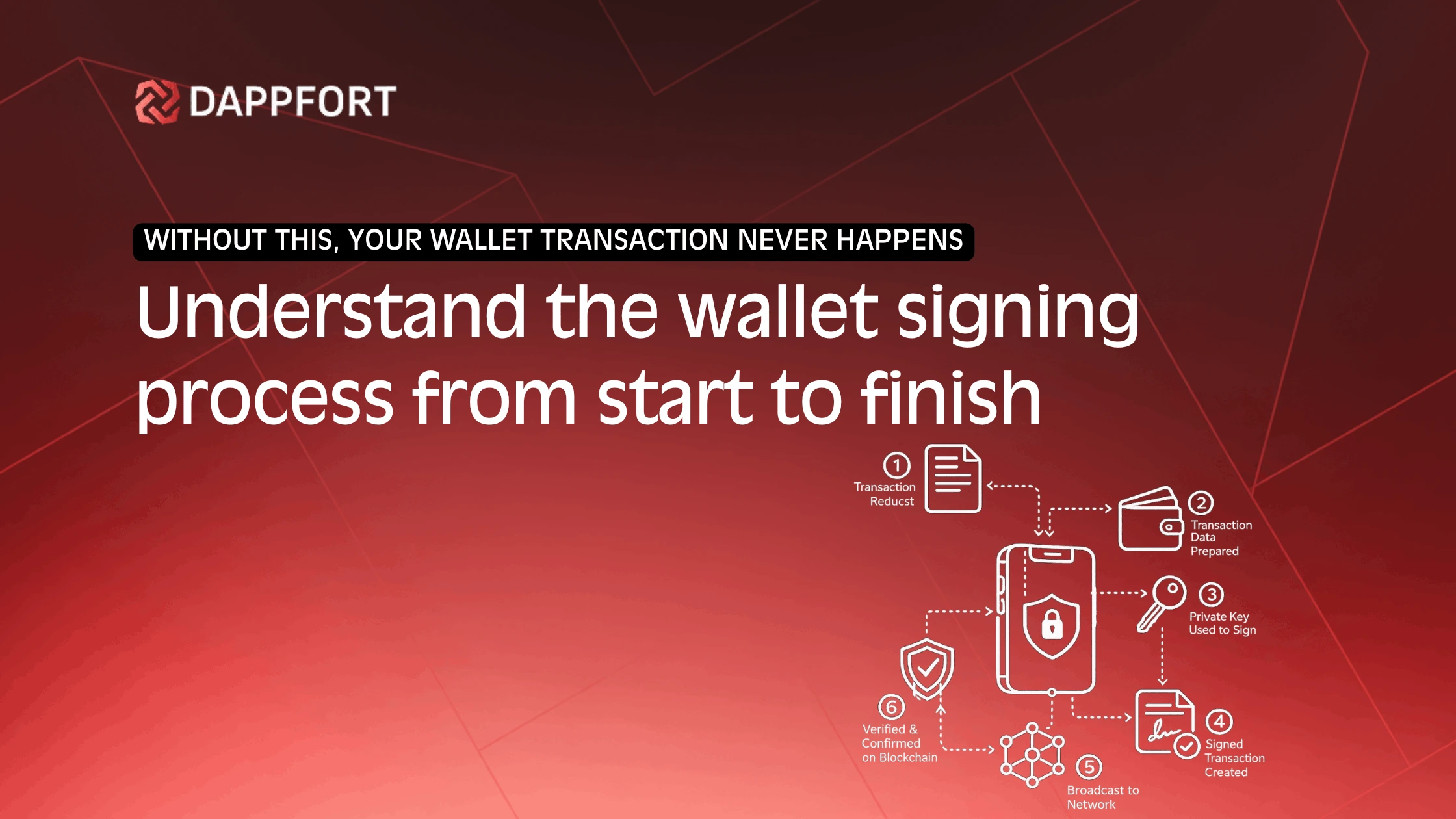
- Wallet Signing Process Explained: How Crypto Wallet Transactions Are Authorized and Secured