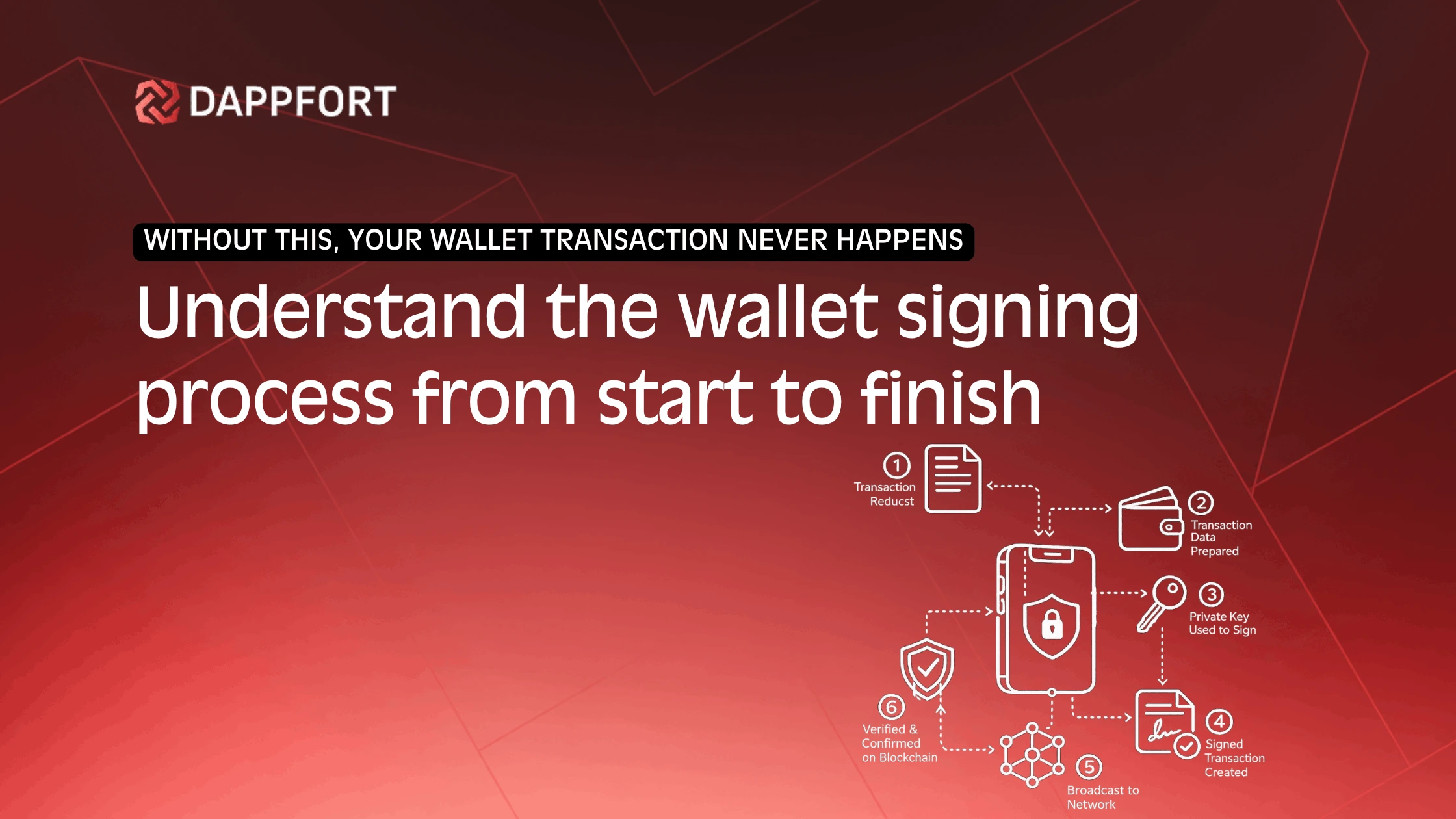
Behind every cryptocurrency exchange, institutional custody platform, Web3 application, and blockchain payment system sits a sophisticated wallet infrastructure one that’s been purpose-built to secure digital assets at scale. Most users only ever see the front-end wallet interface. What stays hidden is the enterprise-grade security architecture quietly working behind the scenes.
Modern cryptocurrency wallet systems now bring together a range of powerful technologies:
- Advanced cryptography
- Multi-layered authentication
- Hardware-based key isolation
- Blockchain node infrastructure
- Distributed transaction signing
- Real-time threat monitoring
- Regulatory compliance frameworks
Together, these technologies protect billions of dollars in digital assets every single day. As cyberattacks on crypto companies continue to rise globally, crypto wallet architecture has become one of the most critical investments for exchanges, fintech companies, institutional investors, and Web3 startups.
Why Wallet Architecture Matters for Crypto Businesses?
The cryptocurrency industry has seen some of the biggest cybersecurity breaches in financial history. Most of those attacks shared a common thread and it wasn’t the blockchain itself that failed.
In many cases, the real damage came from:
- Private key theft
- Exchange compromises
- Insider attacks
- RPC endpoint manipulation
- Seed phrase leaks
- Smart contract exploitation
- Infrastructure vulnerabilities.
The blockchain technology itself was rarely the weak link. Poor wallet infrastructure was the actual problem — and that’s a critical distinction.
That’s exactly why serious crypto companies today are investing heavily in:
- Enterprise wallet security
- MPC infrastructure
- Cold storage systems
- Multi-signature authorization
- Secure node communication
- Zero-trust access control
- Institutional custody architecture.
For businesses operating in digital assets, strong wallet security isn’t optional anymore — it’s a core operational requirement.
Core Components of Enterprise Cryptocurrency Wallet Architecture
Modern wallet systems aren’t a single tool, they’re a stack of interconnected infrastructure layers, each one playing a specific role in protecting operations.
Enterprise Wallet Architecture Overview:
- Frontend Wallet Interface
- Authentication & Access Control
- Wallet Engine Core
- Private Key Management Layer
- Transaction Signing Infrastructure
- Node Communication Layer
- Blockchain Networks.
Each layer is essential. Weakness in any one of them can compromise the entire system.
Wallet Engine Structure
What Is a Wallet Engine?
The wallet engine is the operational core of any cryptocurrency wallet platform. It’s responsible for managing everything that keeps the wallet running, wallet creation, address generation, transaction processing, blockchain synchronization, fee estimation, asset management, transaction signing, and security validation.
Without a properly designed wallet engine, even the strongest cryptographic protections can fall apart in practice.
Why Enterprise Wallet Engine Design Matters?
For crypto exchanges, fintech companies, and institutional custody providers, wallet engine performance has a direct impact on security, scalability, transaction speed, regulatory readiness, user trust, and infrastructure stability. A weak wallet engine doesn’t just slow things down, it opens up new attack surfaces and creates operational bottlenecks that are hard to fix under pressure.
Key Features of Modern Wallet Engines
Multi-Chain Infrastructure
Today’s enterprise wallets are built to support multiple blockchain ecosystems at once Bitcoin, Ethereum, Solana, Polygon, Avalanche, BNB Chain, and more. This multi-chain capability lets businesses scale across the expanding Web3 economy without maintaining separate systems for each network.
API-Driven Architecture
Enterprise wallet systems increasingly run on API-based infrastructure. This makes it far easier to integrate with payment systems, handle asset transfers, support exchange operations, connect with Web3 applications, and manage custody workflows. API-driven architectures also improve both scalability and the level of automation businesses can achieve.
Real-Time Risk Monitoring
Advanced wallet engines don’t wait for problems to be reported, they watch for them continuously. That means monitoring for suspicious withdrawals, abnormal transaction patterns, unauthorized access attempts, wallet anomalies, and infrastructure threats around the clock.
Private Key Management
Why Private Keys Are Critical?
A private key controls ownership of cryptocurrency assets. If that key is ever compromised, the funds tied to it are gone — permanently. There’s no recovery process, no customer support escalation, no way back. That reality makes private key management one of the most consequential security layers in any wallet architecture.
Common Security Concerns Among Crypto Businesses
Institutional buyers and crypto startups regularly ask:
- How do exchanges actually secure billions in crypto?
- What’s the safest key management system available?
- How can companies protect against insider threats?
- Is cold storage alone enough?
- Should enterprises move to MPC wallets?
- What infrastructure actually reduces single points of failure?
Modern wallet systems address these concerns through layered cryptographic security.
Enterprise Private Key Management Methods
Hardware Security Modules (HSMs):
HSMs are tamper-resistant hardware devices built specifically to protect cryptographic keys. They provide offline key isolation, reduce insider risk, offer hardware-based encryption, and support compliance requirements. HSMs are considered fundamental to any serious institutional custody setup.
Multi-Party Computation (MPC):
Rather than storing a complete private key in a single location, MPC distributes the cryptographic operations across multiple systems. No one location ever holds the full key. There’s no single point of failure, key exposure is dramatically reduced, and the approach scales well for institutional operations.
Cold Storage Systems:
Cold wallets store private keys completely offline, removing internet exposure from the equation. Common methods include hardware wallets, air-gapped signing devices, and offline vault infrastructure. Large exchanges typically keep the majority of customer assets in cold storage environments.
🔒 Not Sure If Your Wallet Infrastructure Is Secure?
Most crypto companies don’t discover security gaps until after something goes wrong. By then, it’s too late. Our team audits wallet infrastructure for exchanges, custodians, and Web3 companies — and finds real vulnerabilities before attackers do.
HD Wallet System (Hierarchical Deterministic Wallets)
What Is an HD Wallet?
An HD wallet generates multiple wallet addresses from a single master seed phrase, following established standards including BIP32, BIP39, and BIP44. HD wallets have become the industry standard for scalable wallet management across both individual users and large platforms.
Why HD Wallet Architecture Matters?
Before HD wallets became widespread, managing addresses was genuinely painful. Users needed multiple backups, address management was inefficient, and recovery processes were complicated and error-prone. HD wallets simplified the entire infrastructure while actually improving both privacy and scalability at the same time.
HD Wallet Structure Explained
A Master Seed Phrase generates a Master Private Key, which enables Child Key Generation, which produces Public Wallet Addresses. This structure allows enterprises and exchanges to generate millions of secure wallet addresses efficiently — all recoverable from a single seed.
Benefits of HD Wallet Systems
Simplified Recovery
One seed phrase is all it takes to restore the entire wallet ecosystem. That’s a significant operational advantage compared to managing individual backups for every address.
Enhanced Privacy
HD wallets make it easy to generate a fresh wallet address for each transaction, making it harder to trace activity back to a single source.
Multi-Asset Support
A single HD wallet structure can support multiple blockchain ecosystems simultaneously, reducing complexity for platforms that operate across chains.
Enterprise Scalability
Large platforms can generate high volumes of addresses securely without creating management overhead that grows out of control.
Node Communication Layer
What Is the Node Communication Layer?
The node communication layer is what connects wallets to blockchain networks. Without it, wallets can’t broadcast transactions, verify balances, read blockchain data, or confirm transaction status. It’s the communication bridge between wallet systems and the decentralized networks they rely on — and it’s a part of the stack that doesn’t always get the attention it deserves.
How Enterprise Wallets Communicate With Blockchains?
Modern wallet systems typically use full blockchain nodes, light nodes, RPC APIs, WebSocket infrastructure, and blockchain gateway providers. Secure and reliable node communication is essential for both operational continuity and transaction integrity.
Security Risks in Node Infrastructure
Malicious RPC Endpoints
A compromised node can manipulate blockchain data or actively disrupt wallet operations. This is a real and underappreciated threat vector.
Privacy Leakage
Public node providers may track wallet behavior and transaction metadata — which creates privacy risks for institutional users who can’t afford that kind of exposure.
Transaction Delays
Infrastructure failures at the node level can interfere with transaction broadcasting, creating delays that can be costly in volatile markets.
Censorship Risks
Centralized node providers could, in theory, restrict access to certain wallets or transactions — a risk that becomes more relevant as regulatory pressure increases.
How Enterprise Wallets Secure Node Communication
Multi-Node Verification
Rather than trusting a single source, wallets cross-check blockchain data across multiple independent nodes. This makes it much harder for a single compromised node to manipulate what the wallet sees.
Encrypted Communication
HTTPS and TLS protocols secure all communication channels between wallet systems and blockchain networks.
Proprietary Blockchain Infrastructure
The largest exchanges operate their own private blockchain nodes rather than depending on external providers. This gives them better reliability, performance, and control.
Real-Time Infrastructure Monitoring
Automated monitoring systems watch for suspicious node behavior and flag anomalies the moment they appear.
Security Layers That Protect Billions
Modern cryptocurrency wallet infrastructure uses multiple overlapping security systems, each designed to reduce attack surface and operational risk. No single layer is sufficient on its own the strength comes from requiring attackers to defeat all of them at once.
| Security Layer | Enterprise Function |
| MPC Infrastructure | Reduces private key exposure |
| Cold Storage | Keeps digital assets offline |
| HSM Security | Hardware-based cryptographic protection |
| HD Wallet Systems | Scalable address generation |
| Multi-Signature Authorization | Prevents unauthorized transactions |
| Node Verification | Protects blockchain communication |
| Zero-Trust Access Control | Reduces insider threats |
| Real-Time Monitoring | Detects suspicious activity |
This multi-layered approach has become the industry standard for institutional-grade wallet security.
Compliance Requirements for Crypto Businesses
As cryptocurrency regulation continues to evolve, enterprise wallet providers are increasingly building compliance directly into their infrastructure — not treating it as a separate concern.
Modern wallet systems are now being designed to include:
- KYC integration
- AML monitoring
- Audit logging
- SOC 2 readiness
- Access control systems
- Transaction monitoring
- Encrypted data storage
Institutional buyers, in particular, tend to prefer wallet providers that demonstrate both strong security and regulatory preparedness. The two go hand in hand.
Business Use Cases for Modern Wallet Architecture
Crypto Exchanges
Exchanges need wallet infrastructure that can handle millions of secure transactions every day without creating bottlenecks or exposing vulnerabilities at scale.
Institutional Custodians
Custodians rely on MPC, HSMs, and cold storage systems to protect large reserves of digital assets on behalf of their clients — where security standards are non-negotiable.
Web3 Platforms
Web3 companies need secure wallet APIs that work reliably with decentralized applications and smart contract interactions without exposing the underlying key management layer.
Fintech Companies
Fintech firms are integrating crypto wallet systems to power blockchain payments and digital asset services — which requires wallet infrastructure that meets both security and compliance standards.
NFT Marketplaces
NFT platforms depend on secure, reliable blockchain communication layers to handle asset transfers and authentication with consistency.
Future Trends in Cryptocurrency Wallet Architecture
The next generation of enterprise wallet infrastructure is already taking shape. Several developments are worth watching closely:
- AI-powered fraud detection smarter pattern recognition that catches threats before they escalate
- Biometric authentication moving beyond passwords toward biological factors
- Quantum-resistant encryption preparing cryptographic systems for a post-quantum world
- Zero-knowledge security systems verifying information without revealing the underlying data.
- Decentralized identity integration giving users more control over their own credentials.
- Smart contract automation reduces manual steps in wallet operations.
- Cross-chain interoperability unified infrastructure that works seamlessly across blockchain networks. As institutional adoption of crypto accelerates, wallet architecture will keep evolving into increasingly specialized security infrastructure purpose-built for an industry that moves fast and attracts well-resourced.
Choosing the Right Wallet Architecture Matters
For crypto exchanges, fintech startups, institutional investors, and Web3 platforms, the wallet architecture you choose has direct consequences for security, scalability, compliance, customer trust, and infrastructure resilience.
Businesses that invest in enterprise-grade wallet infrastructure are simply better positioned to prevent cyberattacks, protect customer assets, meet evolving compliance standards, and scale blockchain operations securely.
In today’s rapidly evolving digital asset economy, selecting the right cryptocurrency wallet development architecture isn’t just a technical decision it’s one of the most important strategic decisions a business can make.
Secure Your Crypto Wallet Platform with Enterprise-Grade Protection
Build a highly secure and scalable cryptocurrency wallet with Dappfort’s advanced blockchain development expertise.
Frequently Asked Questions (FAQ)
What is cryptocurrency wallet architecture?
Cryptocurrency wallet architecture refers to the infrastructure used to manage private keys, authorize transactions, communicate with blockchain networks, and secure digital assets.
What is the safest crypto wallet architecture?
Cold storage combined with MPC and hardware security modules is widely considered one of the safest enterprise wallet architectures available today.
Why do enterprises use MPC wallets?
MPC wallets reduce private key exposure by distributing cryptographic operations across multiple systems, minimizing single points of failure.
What is an HD wallet system?
An HD wallet generates multiple wallet addresses from a single recovery phrase using standards like BIP32 and BIP39.
Why is node communication important in crypto wallets?
Node communication allows wallets to interact with blockchain networks for transactions, synchronization, and balance verification.
How do crypto exchanges protect billions in digital assets?
Large exchanges use layered security systems including cold storage, MPC infrastructure, HSMs, real-time monitoring, and secure blockchain node infrastructure.
What is the difference between custodial and non-custodial wallets?
Custodial wallets are managed by third parties, while non-custodial wallets give users full control over their private keys.
Why is wallet architecture important for Web3 businesses?
Wallet architecture affects platform security, scalability, compliance readiness, transaction reliability, and customer trust.