This is one of the first questions every business asks — and one that usually gets a very vague answer. “It depends” is technically true but not helpful when you are trying to plan a budget or set a launch date.
So here is a clearer answer. Yes, the timeline depends on what you are building.
But once you understand what actually affects the time, you can get a pretty good idea of where your project lands.
The Quick Answer
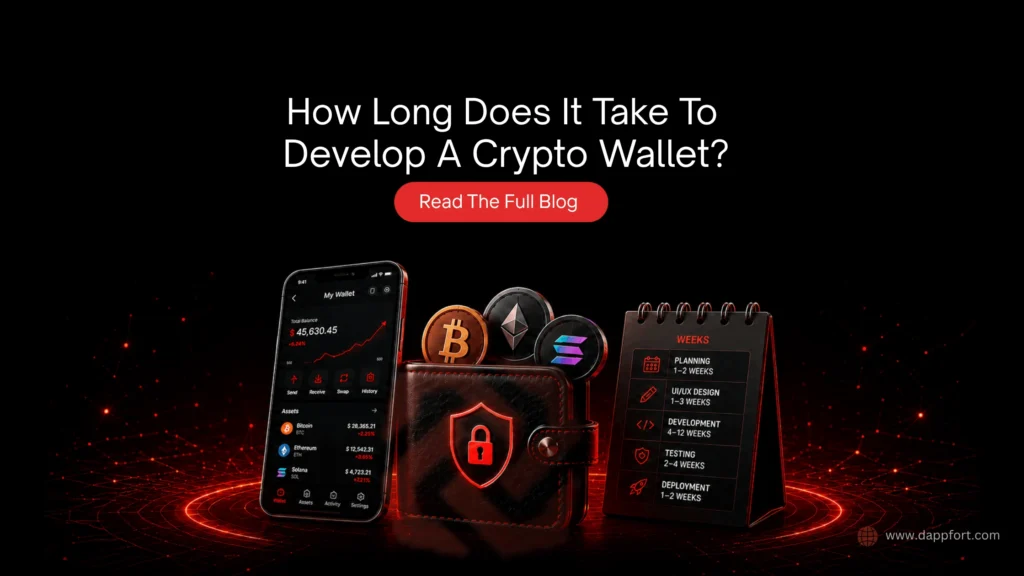
A basic crypto wallet takes 8 to 12 weeks.
A mid-level wallet with multiple blockchains and DeFi features takes 12 to 20 weeks.
A full enterprise wallet with advanced security and compliance takes 5 to 9 months.
These are honest timelines for wallets built properly — not rushed builds that cause problems later.
What Makes a Wallet Development Take Longer Time?
The timeline for crypto wallet development relies on a number of technical and business decisions taken during the planning stage. Some wallets can go live faster, while others require extra effort around security, compliance, integrations, and testing. Knowing these factors helps teams plan smarter, use resources more effectively, and prevent expensive delays throughout the development process.
How many blockchains it supports
This is the biggest one most people miss. Every blockchain you add needs its own setup — its own connection, transaction logic, fee calculations, and testing. A wallet that supports two blockchains is very different from one that supports ten. Each new chain adds one to three weeks of work.
The security setup
Basic key storage is quick to build. MPC architecture — where the private key is split across multiple locations so no single point can be attacked — takes four to eight weeks more. The security model you choose early on directly affects how long the whole build takes.
Custodial or Non-custodial
Custodial wallets where your platform holds the keys are generally faster to build. Non-custodial wallets where users hold their own keys need more careful setup — secure key generation, backup systems, and recovery options all take extra time to get right.
Compliance and Legal Requirements
Identity checks, transaction monitoring, and anti-money laundering features take longer than most people expect. Depending on where you operate, this can add four to ten weeks. Teams that skip this early almost always pay more to fix it later.
Mobile, Web, or Both
Mobile only is faster. Mobile plus web takes longer. Adding a browser extension adds more time again. Each platform needs its own development and testing.
DeFi Features
A wallet that only sends and receives crypto is one project. A wallet with staking, swapping, and lending built in is a much bigger one. Each DeFi feature needs careful development and testing to work safely.
Design and User Experience
A wallet that feels easy to use does not happen by accident. Good onboarding, clear transaction screens, and helpful error messages all take real time to design and build — but they make a big difference in whether users actually stick around.
Timeline by Wallet Type:
Basic Single-Chain Wallet 8 to 12 weeks. One blockchain, basic send and receive, standard security, mobile app. Good for teams testing an idea before going bigger.
Mid-Level Multi-Chain Wallet 12 to 20 weeks. Multiple blockchains, DeFi features, biometric login, KYC, fiat payments. Good for startups and businesses that need a proper product.
Enterprise Wallet 5 to 9 months. MPC security, full compliance, multi-approval systems, audit trails, security audit. Good for exchanges and fintech platforms holding real user funds.
White-Label Wallet 4 to 8 weeks. A ready-made base customised for your brand and needs. Good for teams that need to launch quickly.
The Parts That Take Longer Than Expected
Security review and audit
Testing for security issues and getting an independent audit done takes time. For enterprise wallets, allow four to eight weeks just for this. It cannot be rushed without creating risk.
Compliance setup
Setting up identity checks and transaction monitoring is not as simple as it sounds. These features connect to the core of how the wallet works, so changes here affect a lot of other things and need careful testing.
Testing across Multiple Blockchains
Testing a wallet on ten blockchains is not just ten times the work — it is more, because each chain behaves slightly differently and you need to test what happens when they interact. This takes longer than most teams plan for.
App Store Approval
Getting a crypto wallet approved on Apple’s App Store can take one to four extra weeks on top of your build time. Plan for this from the start.
Mistakes That Make Projects Take Longer
Changing the security model halfway through. Key management touches almost everything in a wallet. Changing it mid-build means redoing large parts of the work. Decide this at the very beginning.
Leaving compliance until later. Every week this gets delayed adds more time to fix it properly. It is much easier to build compliance in from the start than to add it to a finished wallet.
Rushing the testing phase. Problems found in testing are cheap to fix. Problems found after launch are expensive — and in crypto, sometimes cannot be fixed at all.
Adding features mid-build. Every new feature added during development pushes the timeline out. Agree on the scope at the start and stick to it.
How to Speed Up Development Without Compromising Quality?
Start with a white-label base. Using a pre-built wallet foundation and customising it is much faster than starting from zero. The core work is already done — you are adding your features and branding on top.
Launch with fewer features first. A focused wallet launched in ten weeks beats a full-featured wallet launched six months late. Get your core product live and add features afterward.
Sort out compliance early. Getting this scoped and built in from day one saves far more time than it costs.
Be realistic about blockchain support. Launch with the chains your main users need. You can always add more later — it is far easier than building for ten chains at once under time pressure.
Questions to Ask Any Wallet Development Company About Timeline
Before you commit to a development partner, these questions will tell you a lot about whether their timeline estimate is realistic or optimistic.
What is included in your timeline estimate — and what is not?
Some estimates include only the build phase and leave out security audit, compliance integration, and testing. Make sure you are comparing like for like.
Have you built wallets with this security architecture before?
A team estimating a timeline for MPC wallet development should have built MPC wallets before. If they have not, their estimate is a guess. Ask for specific examples.
How do you handle scope changes during development?
Every project has some changes. How a team manages them determines whether they extend the timeline by days or by months. A clear change management process is a sign of an experienced team.
What does post-launch support look like?
A team that does not have a clear post-launch support model is a team you will struggle to reach when something needs fixing after delivery. Understand this before you sign anything.
What has caused your wallet projects to run late in the past?
Any experienced team has had projects run late. How they answer this question — honestly, with specific examples and lessons learned, or vaguely — tells you a lot about how they operate.
Can I speak to a past client about their experience?
This is the most useful question of all. A development company with a strong track record should be able to connect you with clients who will speak honestly about their experience.
How Dappfort Approaches Timeline Planning
When a new client comes to us with a wallet project, the first conversation is never about timeline. It is about scope, security requirements, compliance obligations, and what success looks like for the business.
Once those are clear, we build a timeline from the ground up based on the actual work involved — not a number chosen to win the project. We explain what drives each phase, where the risks are, and what decisions made early can shorten the build without compromising what matters.
We also build post-launch support into every engagement from the start. Blockchain networks will upgrade, new chains will need adding, compliance requirements will change. Planning for this from day one means our clients are not caught off guard when it happens.
Develop Your Wallet With Dappfort: Best Cryptocurrency Wallet Development Company
Timeline estimates only mean something when the team giving them has actually built wallets before and knows where things go wrong.
Dappfort, a leading Cryptocurrency wallet development company, has built crypto wallets for consumer apps, enterprise platforms, DeFi products, gaming companies, and fintech businesses. We give honest timelines before any commitment, keep the scope clear so there are no surprises mid-build, and build security and compliance from day one.
If you want to know what it would take to build your specific wallet — and how long it would realistically take — that conversation is worth having early.
Build a Secure Crypto Wallet With a Trusted Development Partner
Whether you need a single-chain wallet, multi-chain DeFi wallet, MPC wallet, or enterprise-grade custody solution, Dappfort helps you plan, develop, and launch secure crypto wallet solutions with realistic timelines, transparent execution, and end-to-end technical support.