The cryptocurrency landscape is evolving rapidly, and Lightning Network wallet development has emerged as one of the most promising innovations in the Bitcoin ecosystem. As transaction speeds and costs continue to challenge traditional blockchain payments, the Lightning Network offers a revolutionary solution that’s transforming how we think about digital currency transfers.
What is a Lightning Network Wallet?
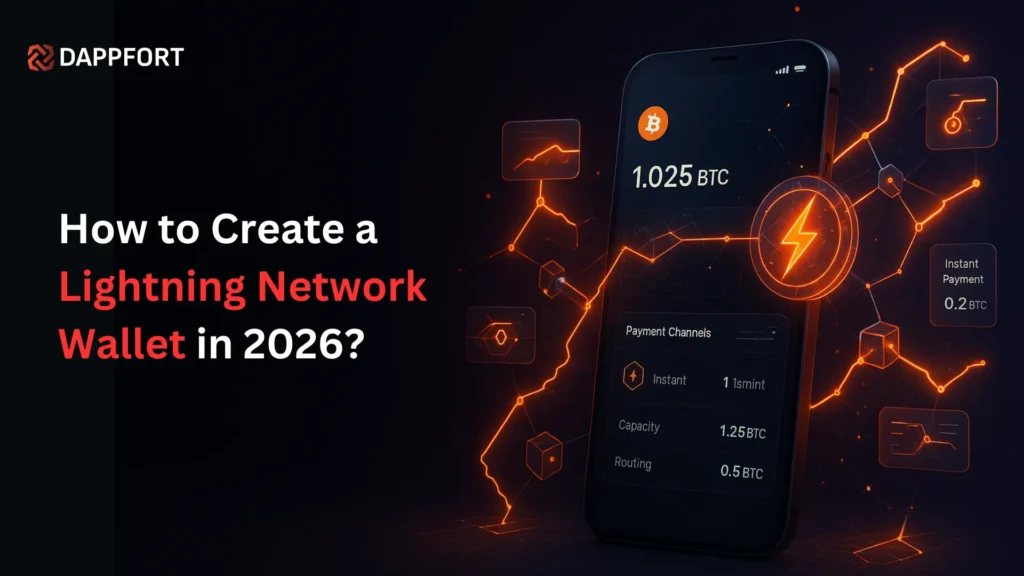
A Lightning Network wallet is a specialized digital wallet that enables users to conduct instant, low-cost Bitcoin transactions through the Lightning Network protocol. Unlike traditional Bitcoin wallets that process transactions directly on the blockchain, a bitcoin Lightning Network wallet operates on a second-layer payment protocol built on top of the Bitcoin blockchain.
The Lightning Network creates payment channels between users, allowing them to execute multiple transactions off-chain before settling the final balance on the main Bitcoin blockchain. This innovative approach dramatically reduces transaction fees and processing times, making microtransactions practical and efficient.
Lightning Network wallets maintain two key components: an on-chain Bitcoin wallet for opening and closing payment channels, and an off-chain layer for conducting rapid Lightning Network payments. This dual structure enables users to enjoy the security of Bitcoin’s blockchain while benefiting from near-instantaneous transaction speeds.
Why Should You Invest in Lightning Network Wallet Development?
The case for investing in Lightning Network wallet development has never been stronger. Here’s why forward-thinking businesses and developers are prioritizing this technology:
Explosive Market Growth
The Lightning Network has experienced remarkable adoption, with network capacity growing substantially over recent years. As Bitcoin continues its journey toward mainstream acceptance, the demand for scalable payment solutions intensifies. Developing a Lightning Network wallet positions your business at the forefront of this financial revolution.
Solving Real-World Problems
Traditional Bitcoin transactions can take 10 minutes to an hour for confirmation and carry fees that make small purchases impractical. Your Lightning Network wallet eliminates these barriers, enabling instant coffee purchases, microtipping for content creators, and seamless cross-border remittances.
Competitive Advantage
Early movers in the Lightning Network space are establishing strong market positions. By launching your own bitcoin Lightning Network wallet, you can capture market share before the space becomes saturated, building brand recognition and user loyalty.
Revenue Opportunities
Lightning Network wallet development opens multiple revenue streams, including transaction fees, premium features, merchant services, and API access for third-party integrations. The wallet can serve as a platform for additional financial services, creating a comprehensive ecosystem around your brand.
Future-Proof Technology
As Bitcoin scalability remains a critical concern, the Lightning Network represents the most viable long-term solution. Investing in this technology today ensures your business remains relevant as the cryptocurrency ecosystem matures.
How to Create a Lightning Network Wallet in 2026
Building a Lightning Network wallet requires careful planning, technical expertise, and strategic decision-making. Here’s a comprehensive roadmap to guide your development journey:
Step 1: Define Your Vision and Target Audience
Begin by identifying your wallet’s unique value proposition. Are you targeting retail consumers, merchants, developers, or institutional users? Your audience will determine feature priorities, user interface design, and security requirements. Conduct market research to understand pain points that existing solutions don’t adequately address.
Step 2: Choose Your Development Approach
You have several development paths available:
Custom Development: Building from scratch gives you complete control over features and branding but requires significant technical resources and time investment.
White-Label Solutions: These pre-built platforms can be customized with your branding, offering faster time-to-market with reduced development costs.
Open-Source Implementations: Leveraging existing open-source Lightning Network implementations like LND, c-lightning, or Eclair provides a solid foundation while allowing customization.
Step 3: Select Your Technical Stack
Your bitcoin Lightning Network wallet needs a robust technical foundation. Key decisions include:
- Lightning Implementation: Choose between LND (Lightning Network Daemon), c-lightning, Eclair, or other implementations based on your requirements
- Programming Language: Popular choices include Go, Rust, JavaScript, or Python depending on your implementation
- Database: Select appropriate storage for channel states, transaction history, and user data
- Frontend Framework: React Native for mobile apps, or React/Vue.js for web applications
Step 4: Design the User Experience
Lightning Network payments should feel effortless. Design an intuitive interface that abstracts the technical complexity from users. Focus on smooth onboarding, clear transaction history, easy channel management, and helpful error messages. Your design should accommodate both cryptocurrency veterans and newcomers.
Step 5: Implement Core Functionality
Develop the essential features that make your Lightning Network wallet functional:
- Secure key generation and storage
- Payment channel creation and management
- Lightning invoice generation and payment
- On-chain Bitcoin wallet integration
- Transaction routing and pathfinding
- Channel backup and recovery
Step 6: Integrate Security Measures
Security is paramount in cryptocurrency applications. Implement multi-layer security including encryption for private keys, secure authentication methods, optional hardware wallet integration, fraud detection systems, and regular security audits. Consider implementing features like watchtowers to protect users’ channels even when their wallet is offline.
Step 7: Conduct Rigorous Testing
Test your Lightning Network wallet extensively across different scenarios, including successful payments, failed transactions, channel force closures, network disruptions, and edge cases. Utilize testnet environments before deploying to mainnet, and consider a beta program with selected users.
Step 8: Ensure Regulatory Compliance
Navigate the regulatory landscape by implementing KYC/AML procedures where required, obtaining necessary licenses for your operating jurisdictions, establishing clear terms of service and privacy policies, and consulting with legal experts familiar with cryptocurrency regulations.
Step 9: Launch and Market Your Wallet
Develop a comprehensive launch strategy including content marketing, community engagement, partnership development, and user acquisition campaigns. Build anticipation before launch and maintain momentum with regular updates and feature releases.
Step 10: Provide Ongoing Support and Updates
The cryptocurrency space evolves rapidly. Commit to regular updates that incorporate Lightning Network protocol improvements, address security vulnerabilities, add new features based on user feedback, and maintain compatibility with the broader Bitcoin ecosystem.
How Does the Lightning Network Wallet Work?
Understanding the technical mechanics of Lightning Network payments helps appreciate the innovation behind this technology.
Payment Channel Creation
When users want to start making Lightning Network payments, they first establish a payment channel by creating a multi-signature Bitcoin transaction on the blockchain. This initial transaction locks a certain amount of Bitcoin that can be used for Lightning transactions. Both parties in the channel hold keys to this multi-sig address, creating a trustless arrangement.
Off-Chain Transactions
Once the channel is open, participants can conduct unlimited transactions without touching the blockchain. Each transaction updates the balance distribution between parties, with both sides signing off on the new state. These balance updates happen instantly and without fees, enabling the microtransactions that make Lightning Network payments so practical.
Channel Routing
The Lightning Network’s true power emerges through its network effect. Users don’t need direct channels with everyone they want to pay. Instead, payments route through interconnected channels, finding paths across the network. Your bitcoin Lightning Network wallet automatically identifies optimal routes, ensuring payments reach their destination efficiently.
Settlement and Channel Closure
When users finish transacting, they can close the payment channel, which broadcasts the final balance state to the Bitcoin blockchain. The locked Bitcoin is then distributed according to the final balance. This settlement process finalizes all transactions that occurred within the channel.
Watchtowers and Security
To prevent fraud, Lightning Network wallets can employ watchtowers—services that monitor the blockchain for dishonest channel closure attempts. If one party tries to broadcast an outdated channel state to steal funds, the watchtower can automatically publish a penalty transaction, protecting honest users even when their wallet is offline.
Top Features to Include in Your Bitcoin Lightning Wallet Development
A competitive Lightning Network wallet needs features that balance functionality, security, and user experience. Here are the essential elements to incorporate:
1. Instant Payment Processing
2. Minimal Transaction Fees
3. Multi-Channel Management
4. QR Code Integration
5. Invoice Generation and Management
6. Channel Autopilot
7. Backup and Recovery Options
8. Multi-Currency Display
9. Transaction History and Analytics
10. Merchant Tools
11. Cross-Platform Synchronization
12. Privacy Enhancements
Popular Lightning Network Wallets to Watch in 2026
The Lightning Network wallet ecosystem has matured significantly, with several implementations demonstrating different approaches and philosophies. Studying these leaders provides valuable insights for your own development project:
Phoenix Wallet
Phoenix represents the cutting edge of user-friendly Lightning wallet design. Built by ACINQ, Phoenix abstracts channel management complexity, automatically handling channel creation and maintenance. Users simply send and receive Bitcoin without worrying about liquidity or technical details. Phoenix’s success demonstrates that Lightning Network payments can be as simple as traditional payment apps when properly designed.
Breez Wallet
Breez positions itself as a complete Lightning ecosystem, combining wallet functionality with a merchant point-of-sale system and podcast integration for value-for-value streaming payments. Their non-custodial approach maintains Bitcoin’s core principles while delivering excellent user experience. Breez shows how a bitcoin Lightning Network wallet can extend beyond simple payments into a comprehensive financial platform.
Wallet of Satoshi
This custodial option prioritizes simplicity above all else. Users can start sending and receiving Lightning payments immediately without understanding channels, liquidity, or node management. While the custodial model sacrifices some sovereignty, Wallet of Satoshi demonstrates the demand for friction-free Lightning experiences, particularly for newcomers.
Muun Wallet
Muun takes a unique approach by seamlessly integrating on-chain and Lightning transactions. Users don’t explicitly choose between payment methods; the wallet automatically selects the optimal approach. This unified experience, combined with strong security features and sophisticated submarine swap technology, makes Muun a favorite among technically-minded users who want flexibility without complexity.
BlueWallet
BlueWallet offers extensive functionality for both casual users and power users. Its clean interface belies sophisticated features including support for hardware wallets, advanced fee management, and comprehensive transaction controls. BlueWallet demonstrates that feature-rich Lightning Network wallets don’t need to sacrifice usability.
Zeus
Aimed at advanced users, Zeus enables connection to personal Lightning nodes via LND or c-lightning. This remote node control capability appeals to sovereignty-focused users who want full control over their Lightning infrastructure while maintaining mobile convenience. Zeus shows there’s strong demand for advanced Lightning Network wallet capabilities.
Strike
Strike leverages the Lightning Network for instant global payments with fiat settlement options. Users can send dollars to anyone globally, with the Lightning Network handling routing in the background. Strike’s approach demonstrates how Lightning technology can power mainstream financial services, abstracting away cryptocurrency complexity entirely.
How Do Dappfort Help You Launch Your Own Lightning Network
At DappFort, we specialize in transforming your Lightning Network wallet vision into reality. Our comprehensive development services cover every aspect of launching a successful bitcoin Lightning Network wallet in today’s competitive market.
At Dappfort, we’ve spent more than eight years in Web3 development, and Lightning Network solutions are one of our core strengths. Our developers are expert in providing crypto wallet development services that make Bitcoin transactions secure, fast, user-friendly, and cost-efficient. If you want to launch your own Lightning Network wallet, we know how to get you there safely and efficiently.
Our advanced capabilities include frontend wallet integration, HD wallet implementation, and gRPC/REST API support — ideal for both beginners and seasoned Lightning Network developers who want a feature-rich architecture.
If you’re ready to build a Lightning wallet in real time with guidance from specialists, we’re here for you. No need to wait. Let’s start today.