Blockchain in real estate works by recording property ownership, transaction history, and transfer of funds on a shared, tamper-proof digital ledger, replacing weeks of paperwork with smart contracts that settle in minutes. It also lets a property be split into digital tokens, so an investor in Toronto or Riyadh can buy a small stake in a Miami apartment building without ever visiting the country.
Key Takeaways
- Settlement speed: Blockchain-based property transfers can close in minutes to a few days, compared to 30-60 days for a traditional U.S. closing involving title search, escrow, and wire reconciliation.
- Lower entry point: Fractional ownership through tokenized real estate lets investors buy a stake for a few hundred dollars instead of a six-figure down payment.
- Borderless access: A digital ledger removes the need for local intermediaries at every step, opening U.S., U.K., Canadian, Australian, and Gulf property markets to investors anywhere with internet access.
- Verifiable ownership history: Every transfer is timestamped and permanent, cutting down on title fraud and disputes that plague paper-based county records.
- Regulatory work is non-negotiable: KYC/AML checks, securities compliance, and custody of digital assets still have to be built into the platform, not bolted on afterward.
Blockchain in Real Estate at a Glance
Feature | How Blockchain Delivers It | Investor Impact |
| Transparency | Immutable, timestamped ledger of every ownership change | Fewer title disputes, faster due diligence |
| Fractional ownership | Property equity split into tradeable digital tokens | Entry from a few hundred dollars instead of a full purchase |
| Entry from a few hundred dollars instead of a full purchase | Digital marketplace with no local intermediary requirement | Cross-border investors participate without a local broker |
| Settlement speed | Smart contracts trigger fund and title transfer automatically | Deals close in minutes to days, not weeks |
| Liquidity | Secondary token marketplaces | Investors can exit a position without selling the whole property |
| Compliance | KYC/AML and accreditation checks baked into the token issuance | Regulators and title insurers get an auditable trail |

1. Why Traditional Real Estate Investment Has Friction?
Buying a rental property or a commercial building has never been simple. A buyer in the United States typically works through a title company, an escrow agent, and a bank, each holding a piece of the paperwork and each adding days to the timeline. Closing a single deal can take 30 to 60 days, and cross-border buyers often wait even longer while banks verify the source of funds.
Minimum capital is another wall. Direct ownership of income-producing property usually requires a large down payment, leaving smaller investors locked out or pushed toward less transparent pooled funds. Title records, meanwhile, still live in county courthouses or fragmented registries that are not always digitized or easy to verify remotely.
These friction points, slow transfers, high entry costs, and opaque records are exactly what a growing number of proptech and fintech platforms are trying to solve with distributed ledger technology. The real estate asset class is enormous, but it has been one of the slowest to modernize its back-office plumbing.
2. How Blockchain Changes the Real Estate Investment Model?
A blockchain is a shared record book that many computers hold copies of at once. Once an entry is added, changing it would require rewriting every copy simultaneously, which is practically impossible. That property makes the ledger trustworthy without needing a single central authority to police it.
Applied to property investment, this means an ownership record, a rent distribution, or a transfer of funds can be written once and verified by anyone with permission to see it. Smart contracts, self-executing code stored on the blockchain, handle the mechanical parts of a deal: releasing funds once conditions are met, distributing rental income proportionally to token holders, or updating the ownership registry the moment a sale closes.
Instead of buying a deed to an entire building, an investor buys digital tokens that represent a slice of the property’s equity or its income stream. The property itself doesn’t move, but the way ownership is tracked and traded changes completely. This is the same underlying model used in real estate tokenization, where a single asset is divided into hundreds or thousands of tradeable units.
3. Transparency: Immutable Records Investors Can Trust
Every transaction on a blockchain carries a timestamp and a cryptographic link to the one before it. That chain can’t be edited quietly. For real estate, this solves a problem that has existed for as long as property records have: it is hard to fully trust an ownership history that lives across scattered paper files, some of which may be incomplete, altered, or lost.
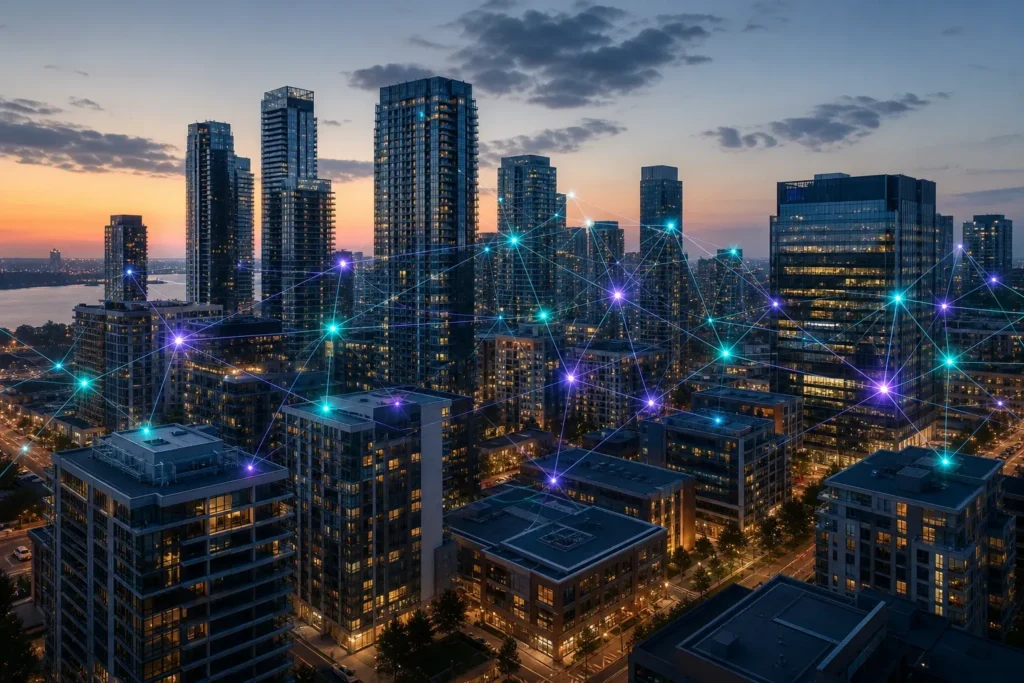
With an immutable record, a buyer, lender, or title insurer can trace a property’s full chain of ownership without relying on a single office’s filing accuracy. This lowers the cost and time of due diligence, and it directly reduces the risk of title fraud, a problem flagged by federal fraud-tracking authorities as a growing target for scammers who file forged deeds against vacant or vacation properties.
For investors, transparency isn’t just a compliance nicety. It’s the reason they can trust that the token they hold actually represents what the platform says it represents, and that the rental income or resale proceeds recorded on-chain match what they actually receive.
4. Fractional Ownership: Lowering the Barrier to Entry
Fractional ownership is where blockchain in real estate shows its most visible benefit to everyday investors. A $2 million commercial property can be divided into thousands of digital tokens, each representing a small, defined share of the asset’s value or income. An investor might buy in for a few hundred dollars instead of needing hundreds of thousands.
This changes the investment math in a few practical ways:
- Diversification becomes realistic. An investor with $10,000 can spread it across five or ten properties in different cities instead of concentrating it in one.
- Secondary markets add liquidity. Traditional real estate is notoriously illiquid; a token representing a fractional stake can potentially be resold on a marketplace without waiting for the whole property to sell.
- Entry barriers drop for younger and international investors. Someone building a portfolio for the first time doesn’t need a mortgage pre-approval to start.
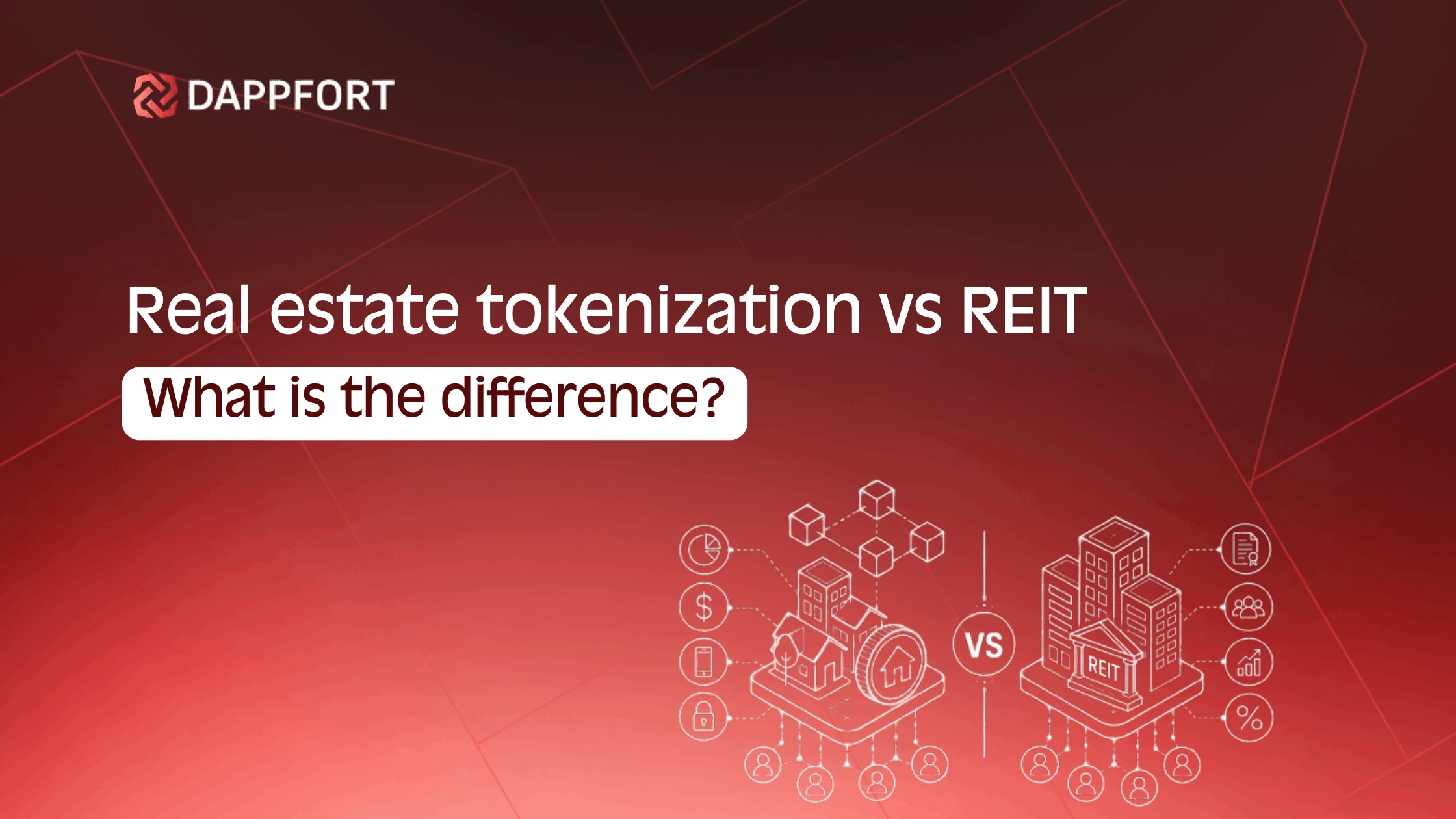
This isn’t the same as buying a REIT share, though the two get confused often. A REIT is a company that owns a portfolio of properties and issues shares in that company. A tokenized real estate offering typically ties the token directly to a specific property or a specific special-purpose vehicle holding that property, with terms defined in a smart contract rather than a fund prospectus alone.
5. Global Investors: Borderless Access to Property Markets
Cross-border real estate investment has traditionally meant hiring a local attorney, opening a local bank account, and navigating currency controls, sometimes just to buy a single unit. Blockchain-based platforms compress much of that into a digital onboarding flow: identity verification, wallet setup, and token purchase, often completed in a single sitting.

This matters for regions where demand for U.S., U.K., Canadian, Australian, and Gulf property is strong but access has historically been limited by geography. An investor in Saudi Arabia or the UAE can evaluate a tokenized offering tied to a U.S. multifamily property on a digital marketplace that runs 24/7, instead of waiting on business-hour closings in a different time zone.
Currency exposure and settlement still need attention. A token priced in U.S. dollars still exposes a foreign investor to exchange-rate movement, and platforms need clear disclosures about how funds move between fiat currency and stablecoins or tokens. But the structural barrier needing a local intermediary just to place capital is significantly reduced. Global regulators, including bodies referenced by the U.S. Securities and Exchange Commission’s digital asset guidance, are actively working through how cross-border digital securities offerings should be treated, which is shaping how these platforms are built today.
6. Faster Settlements: From Weeks to Minutes
A conventional property closing involves a title search, loan underwriting, escrow instructions, and a wire transfer that has to be confirmed before keys change hands. Each step depends on a different party responding on their own timeline, which is why U.S. closings commonly run four to eight weeks even when nothing goes wrong.
A smart contract collapses many of those steps into code. Once pre-agreed conditions are satisfied, funds release and the ownership record updates automatically and simultaneously. For token-based transactions on a secondary marketplace, a trade can settle in minutes rather than days, because there’s no separate reconciliation step between a buyer’s bank, a seller’s bank, and a title company.
This speed advantage compounds for investors who want to rebalance a portfolio quickly, respond to a market shift, or exit a position without being stuck in a weeks-long closing pipeline. Faster settlement also means less capital sitting idle in transit, which improves overall portfolio efficiency.
7. Traditional vs Blockchain-Based Real Estate Investment
The differences become clearest side by side. Here’s how the two models compare across the factors that matter most to an investor deciding where to put capital.
| Factor | Traditional Real Estate | Blockchain-Based (Tokenized) Real Estate |
| Minimum investment | Often $50,000+ for direct ownership | Can start from a few hundred dollars per token |
| Settlement time | 30-60 days for a standard closing | Minutes to a few days via smart contracts |
| Ownership record | Paper deeds, county registries | Immutable digital ledger entries |
| Liquidity | Low; selling can take months | Higher; secondary token markets allow partial exits |
| Geographic access | Usually requires a local agent, attorney, or bank | Digital onboarding available to global investors |
| Intermediaries involved | Broker, title company, escrow agent, lender | Smart contract plus a compliant issuance platform |
| Fractional ownership | Rare, usually via REITs or syndicates | Built into the token structure by design |
8. Compliance and Risk: What Brokers and Fintechs Must Get Right
None of these benefits remove the need for regulatory discipline; they raise the bar for it. A tokenized property offering is very often a security under U.S. law and comparable frameworks abroad, which means issuers need to work through registration exemptions, investor accreditation rules, and disclosure requirements before a single token is sold.
Platforms handling this correctly build in several layers from day one:
- KYC and AML verification on every token holder, not just at onboarding but on an ongoing basis as regulations evolve.
- Securities-law-aware structuring, often through a special-purpose vehicle that holds the physical property while the token represents an interest in that vehicle.
- Custody solutions for private keys and digital wallets, since a lost key can mean a permanently inaccessible investment if there’s no institutional-grade recovery process.
- Smart contract auditing by independent security firms before deployment, because a bug in the code that controls fund transfers is a direct financial risk, not just a technical glitch.
This is where a lot of well-intentioned projects stumble. Building a token is the easy part. Building the compliance, custody, and audit infrastructure around it, so the offering holds up to regulatory and investor scrutiny, is where experienced development partners earn their value.
9. How to Bring a Blockchain Real Estate Platform to Market?
Asset managers and fintech founders exploring this space generally move through the same sequence:
- Legal structuring: Define whether tokens represent equity, debt, or a revenue-share interest, and confirm the applicable securities exemption in each target jurisdiction.
- Tokenization engine: Build or license the smart contract layer that issues, tracks, and transfers tokens on a chosen blockchain.
- KYC/AML integration: Connect identity verification and sanctions screening so only eligible investors can buy or trade tokens.
- Custody and wallet infrastructure: Give investors a secure, user-friendly way to hold tokens without needing deep crypto expertise.
- Secondary marketplace: Add the trading layer that gives fractional owners a path to liquidity after the initial offering closes.
- Investor dashboard and reporting: Provide real-time visibility into ownership percentage, income distributions, and transaction history.
Each of these pieces needs to talk to the others cleanly, which is exactly the kind of integration work fintech teams already lean on outside specialists for. Dappfort brings that same background in building secure, compliant, high-throughput financial platforms, the kind used across Real Estate Tokenization Development Company engagements, to real estate investment platforms that need bank-grade reliability from day one.
If your asset management firm or fintech is evaluating whether to build a tokenized property investment platform, it’s worth mapping the compliance and technical requirements before committing to a vendor or an architecture. A short scoping call can save months of rework later.
Frequently Asked Questions
Is blockchain-based real estate investment legal in the United States?
Yes, when structured correctly. Most tokenized property offerings are treated as securities, so issuers register the offering or rely on an exemption such as Regulation D or Regulation A+, and platforms must verify investor eligibility through KYC and, where required, accreditation checks.
How is fractional ownership through tokens different from buying a REIT share?
A REIT share represents an interest in a company that owns many properties. A real estate token typically represents a direct fractional interest in one specific property or the entity holding it, with rights and income distribution defined in a smart contract rather than a corporate structure.
What happens to token holders if the underlying property is sold?
Sale proceeds are distributed to token holders proportionally to their holdings, usually automated through the smart contract that governs the offering, once the sale closes and funds are received.
Do investors need cryptocurrency to participate in tokenized real estate?
Not always. Many platforms let investors fund purchases with traditional currency, which is converted behind the scenes, so participants don’t need to already hold crypto to buy into a tokenized property offering.
Can existing asset managers add tokenized property offerings to their platform?
Yes. Asset managers can integrate tokenization capabilities alongside their existing trading infrastructure, provided the underlying platform supports the compliance workflows, custody requirements, and reporting that tokenized securities demand.
Ready to Start Investing in Tokenized Real Estate?
Explore vetted tokenization opportunities, understand entry costs, and see how fractional property investing actually works before you commit capital.
Final Thoughts
This piece explains a genuinely complex topic in clear, accessible language, walking through the pain points of traditional real estate before showing how blockchain solves each one. The comparison table and REIT distinction are standout sections, giving readers scannable, practical clarity on how tokenization actually differs from traditional investing. The compliance and risk section also adds credibility, keeping the piece grounded rather than hype-driven. The main area to tighten is the ending, where the Dappfort mention and call-to-action shift the tone from educational to promotional, a reader may notice this pivot.
A few claims, like settlement happening “in minutes,” could use a small caveat that this depends on the platform and jurisdiction, since KYC/AML and banking steps still add time. Overall, it’s a well-structured, informative blog that balances education with a light business pitch near the end.
Related Readings:
- Real Estate Tokenization – The New Way To Invest
- Real Estate Tokenization vs REIT: Key Differences
- Build a Real Estate Tokenization Platform
- Real World Asset Tokenization Platform Development