Table of Contents
Crypto payment gateways are becoming an essential part of the global e-commerce ecosystem. They allow merchants to accept cryptocurrency as a form of payment for products and services, bypassing traditional banking systems and facilitating faster, cheaper transactions. As the demand for cryptocurrencies continues to grow, businesses are increasingly looking to crypto payment gateway revenue streams as a viable solution to expand their payment options.
But how do these gateways generate revenue? In this article, we’ll explore the crypto payment gateay business model and different revenue streams that crypto payment gateways rely on to sustain and grow their businesses. Whether you’re a merchant, an investor, or someone interested in crypto, understanding crypto payment gateway revenue streams is crucial to grasp the business side of crypto payments.
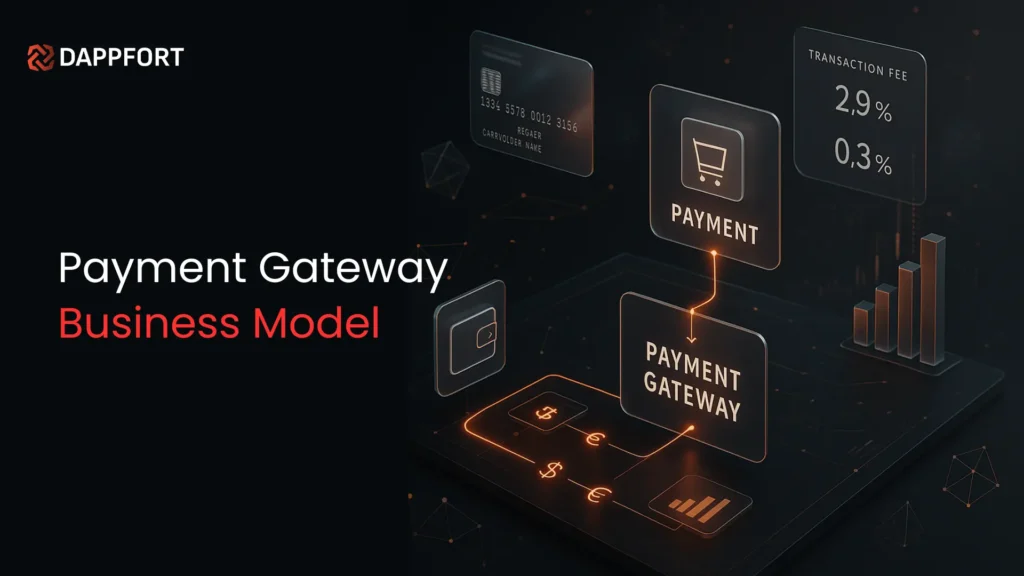
Payment Gateway Business Model
A payment gateway speeds up digital transactions by acting as a trusted link between financial institutions and merchants. It securely processes payment information so money can move from a customer’s account to a merchant’s account without risk. Modern payment gateways work with multiple payment methods including credit and debit cards, online banking, crypto, and other electronic payment systems.
Payment gateways differ based on how and where they operate.
An online payment gateway is built to support e-commerce transactions on websites and apps, helping businesses accept digital payments through secure internet infrastructure.
A physical payment gateway, on the other hand, enables businesses to receive card payments onsite through POS (point-of-sale) devices.
Most traditional payment gateways transfer funds in fiat currencies such as USD, EUR, and GBP. To complete a transaction, they collaborate with card networks and banks — both the issuing bank (customer’s bank) and the acquiring bank (merchant’s bank).
What Happens Behind the Scenes of a Payment Gateway Transaction
- Customer starts the payment
The user selects a product or service and chooses their preferred payment method on the checkout page or POS terminal. - Data capture and security
The payment gateway collects the card details — card number, expiration date, and CVV. SSL encryption protects this data so no unauthorized party can access it. The encrypted information is forwarded to the payment processor. - Payment processor takes action
The processor sends the encrypted transaction details to the card network (Visa, Mastercard, etc.) and performs initial fraud screening. - Card network and issuing bank verification
The card network forwards the request to the bank that issued the customer’s card. The issuing bank performs advanced fraud checks, verifies account balance, and if everything is valid, authorizes the transaction. It then sends an authorization code back through the card network to the payment processor. - Authorization response to merchant
The payment processor passes the authorization back to the payment gateway, which delivers it to the merchant’s website or POS system. Once the merchant receives approval, the customer sees a confirmation and the purchase is complete.
Crypto Payment Gateway Revenue Streams
1. Transaction Processing Fees
How it works: Gateways charge a percentage fee on each transaction processed through their platform.
Typical Fee Structure:
- Standard rate: 0.5% to 1.5% per transaction
- High-volume merchants: 0.3% to 0.8% with negotiated rates
- Small businesses: 1% to 2% for lower volumes
Revenue Potential: With transaction volumes scaling, even small percentages generate substantial revenue. A gateway processing $100 million monthly at 1% earns $1 million in transaction fees alone.
Competitive Advantage: Crypto gateways can offer lower fees than traditional processors (2.9% + $0.30 is common for credit cards) while maintaining healthy profit margins due to reduced infrastructure costs.
2. Monthly Subscription Fees
Tiered Plans:
- Starter Plan ($29-$99/month): Basic features, limited transactions, standard support
- Business Plan ($199-$499/month): Higher transaction limits, advanced analytics, priority support
- Enterprise Plan ($999-$2,500/month): Unlimited transactions, dedicated account manager, custom integrations
Additional Revenue: Subscription models create predictable recurring revenue independent of transaction volumes, providing financial stability during market downturns.
3. Setup and Integration Fees
One-Time Charges:
- Basic integration: $500 to $2,000
- Custom API development: $5,000 to $25,000
- White-label solution setup: $10,000 to $100,000+
- Technical consulting: $150 to $300 per hour
Value Proposition: These fees compensate for the technical expertise and development resources required to integrate payment systems with various e-commerce platforms, shopping carts, and custom applications.
4. Currency Conversion and Exchange Spreads
How Spread Works: When converting crypto to fiat (or between cryptocurrencies), gateways profit from the difference between buying and selling prices.
Typical Spreads:
- Major cryptocurrencies (BTC, ETH): 0.5% to 1.5%
- Altcoins and smaller tokens: 1% to 3%
- Instant conversion services: Additional 0.5% premium
Example: If Bitcoin’s market rate is $50,000, the gateway might buy at $49,750 and sell at $50,250, capturing a $500 spread per BTC processed.
5. Settlement Service Fees
Settlement Options and Fees:
- Standard settlement (1-3 days): Included or 0.25%
- Express settlement (same day): 0.5% to 1%
- Instant settlement (real-time): 1% to 2%
- Bank wire transfers: $25 to $50 per transfer
- Crypto wallet settlements: Network gas fees + 0.1% to 0.3%
Cross-Border Settlements: Additional fees of 0.5% to 2% for international fiat settlements to compensate for banking relationships and forex risks.
6. Advertising Revenue
Once your platform gains momentum and attracts additional users, you can monetize this traffic through advertising. This revenue stream becomes increasingly valuable as your user base grows and engagement increases.
Sponsored Listings: Cryptocurrencies, blockchain projects, or crypto-related businesses can pay to be featured prominently on your platform. This includes:
- Featured cryptocurrency listings on payment selection pages
- Promoted wallet options during checkout
- Highlighted exchange partnerships in merchant dashboards
- Sponsored educational content and resources
- Priority placement in supported currency lists
Pricing for sponsored listings typically ranges from $1,000 to $10,000 per month depending on placement visibility and platform traffic volume.
Ad Space Sales: You can generate consistent revenue by selling advertising space on your website or application. Strategic ad placements include:
- Banner ads on merchant dashboard pages
- Display ads in transaction confirmation screens
- Sidebar advertisements in help and documentation sections
- Video ads in educational content areas
- Native ads within blog posts and resources
Ad space sales provide ongoing revenue streams through:
- Direct ad sales to crypto businesses: $500 to $5,000 per placement monthly
- Programmatic advertising networks: $5 to $50 CPM (cost per thousand impressions)
- Sponsored newsletter placements: $1,000 to $10,000 per campaign
- In-app promotional banners: $2,000 to $15,000 monthly for premium positions
Revenue Potential: Advertising revenue enables you to monetize platform traffic while providing relevant advertising opportunities to other businesses within the crypto space. A payment gateway with 10,000 active merchants and 50,000 daily transactions can generate $100,000 to $500,000 annually through advertising without compromising the core payment experience.
7. Value-Added Services: Extra Features for a Fee
Many crypto payment gateways offer value-added services to help merchants optimize their crypto payment systems. These services could include:
- Fraud Prevention Tools: Tools to reduce the risk of fraudulent transactions.
- Advanced Analytics: Insights into transaction trends, customer behavior, and more.
- Priority Support: Dedicated support teams for premium users.
These services often come with additional fees.
- How It Works: Merchants can choose to pay extra for these value-added services, which can be tailored to meet the specific needs of their business.
- Why It’s Profitable: Offering advanced services helps payment gateways differentiate themselves and provide additional value to their clients, while also boosting their revenue.
Conclusion
Crypto payment gateways are evolving with diverse revenue streams, including transaction fees, currency conversion, subscription plans, and value-added services. As cryptocurrencies become more mainstream, these platforms are adapting to meet the growing demand for digital payments.
If you’re a business looking to integrate crypto payments, it’s crucial to choose a reliable partner with expertise in the field. Dappfort, a leading crypto payment gateway development company, offers customized solutions for businesses wanting to accept crypto payments securely and efficiently.
With their experience in blockchain technology, they help you stay ahead in the digital economy. Embracing crypto payment gateways can unlock new revenue opportunities and position your business for future growth in the global market.