Many crypto startups enter the P2P trading market with exciting ideas and strong expectations.
But once the platform goes live, the real challenges begin.
Users get frustrated with delayed dispute handling, payment issues, or complicated trading processes.
If the platform doesn’t feel secure and smooth to use, traders quickly move back to larger exchanges like Binance P2P.
That’s why working with an experienced P2P crypto exchange development company matters. A successful P2P exchange needs more than basic trading features. Secure escrow systems, easy payment integration, fast transactions, and strong user protection all play a key role in building trust and keeping users active on the platform.
In this blog, we’ll look at the essential P2P crypto exchange features startups and enterprises should focus on to build a reliable and scalable crypto trading platform.
What Are P2P Crypto Exchange Features?
P2P crypto exchange features are the essential tools and systems that allow users to buy and sell cryptocurrencies directly with each other in a secure and smooth trading environment. These features help manage transactions, protect users, handle payments, and maintain platform reliability.
A modern P2P exchange acts as more than just a trading platform. Modern crypto exchange platform development now focuses heavily on security architecture, payment flexibility, scalability, and seamless user experience for long-term platform growth.
The essential features checklist of a P2P crypto exchange include:
- Escrow system
- User verification (KYC/AML)
- Multi-currency wallet integration
- Order matching engine
- Secure payment gateway
- Real-time chat system
- Dispute resolution management
- Liquidity management
- Admin dashboard
- Two-factor authentication (2FA)
- Smart contract integration
- Multi-payment support
- Mobile responsiveness
- Trade analytics & reporting
- API integrations
These features play a major role in improving user trust, transaction security, platform efficiency, and long-term business growth.
If businesses need deeper customization, advanced trading functionalities, or unique platform capabilities, they often choose custom P2P exchange development services. Custom development allows startups and enterprises to build tailored solutions based on their business model, target audience, security requirements, and scalability goals.
Ready to build a scalable and secure P2P crypto exchange?
Core P2P Crypto Exchange Features Checklist for Launch:
The success of a P2P exchange depends heavily on its feature architecture. Businesses aiming to launch scalable trading ecosystems often invest in professional peer-to-peer exchange development services to implement secure escrow systems, wallet integrations, and advanced trading workflows. Below is the essential features checklist every startup and enterprise should prioritize.
1. User Registration & Authentication
Secure onboarding is essential for preventing unauthorized access and improving user trust.
Must-Have User Onboarding Features
- Email & mobile registration
- Social login integration
- Two-factor authentication
- Biometric authentication
- Device verification
- Anti-phishing protection
2. Escrow Protection System
Escrow functionality is the backbone of secure P2P crypto trading. The system locks crypto assets until payment confirmation is completed.
Types of Escrow Models
Custodial Escrow: The exchange temporarily holds crypto assets.
Smart Contract Escrow: Automated blockchain-based escrow using smart contracts.
Escrow Features Checklist
- Automated escrow locking
- Smart contract escrow
- Trade expiration timers
- Multi-signature verification
- Escrow dispute handling
- Auto-release conditions
3. Multi-Currency Wallet Integration
Modern users expect support for multiple cryptocurrencies and blockchain networks. Wallet infrastructure manages deposits, withdrawals, escrow balances, and asset storage.
Wallet Features
- BTC, ETH, Multi-currency wallet support
- Hot & cold wallet systems
- Stablecoin compatibility
- USDT support
- Custodial wallets
- Deposit and withdrawal management
- Non-custodial wallets
- Multi-chain integration
- Real-time balance updates
Supported Standards
- ERC20
- TRC20
- BEP20
- Solana SPL tokens
4. KYC & AML Verification
Compliance infrastructure is critical for reducing fraud risks and supporting regulatory operations.
Compliance Features
- Identity verification
- Document authentication
- Facial recognition
- AML transaction monitoring
- Sanctions screening
- Suspicious activity detection
- Risk scoring systems
Popular KYC Providers
- Sumsub
- Onfido
- Jumio
- Shufti Pro
5. Trading Engine Features
The trading engine powers transaction matching and execution.
Trading Engine Requirement Checklist
- Real-time Order matching engine
- High Transaction throughput
- Real-time price updates
- OTC trading support
- Liquidity aggregation
- Market analytics
- Trading history
- Low latency execution
- Matching Algorithms
- Order Book Visualization
Enterprise-Level P2P trading Capabilities
- AI-powered trade optimization
- Advanced analytics
- Institutional liquidity routing
- High-frequency trading support
6. Fiat Payment Gateway Integration
Fiat integration improves accessibility for mainstream crypto traders.
Essential Payment Methods
- UPI
- Bank transfer
- PayPal
- Skrill
- Neteller
- Mobile wallets
- Digital Wallets
- Credit/debit cards
- Regional payment gateways
Payment Features Checklist
- Instant payment verification
- Transaction proof upload
- Payment notifications
- Automated reconciliation
7. Dispute Resolution System
Disputes are common in peer-to-peer trading. A strong dispute management system builds platform trust.
Required Dispute Features
- Trade evidence uploads
- Moderation dashboard
- Automated ticket creation
- Escalation management
- Chat history review
- Refund management
AI-Based Fraud Detection
Advanced platforms now use AI systems to:
- Detect suspicious trading patterns
- Identify fake payment proofs
- Flag risky accounts
8. Real-Time Chat & Notifications
Buyers and sellers need direct communication during P2P exchange transactions. These communication tools improve trade completion rates and user experience.
Chat Features Checklist
- End-to-end encrypted chat
- File uploads
- File sharing
- Trade-linked conversations
- Push alerts
- SMS/email alerts
- Message moderation
- Real-time notifications
9. Liquidity Management
Liquidity is essential for fast and successful trades.
Without liquidity, users may leave the platform.
Liquidity Features
- Liquidity APIs
- Market maker integration
- OTC desk integration
- Internal liquidity pools
- Dynamic pricing
Enterprise Liquidity Enhancements
- Institutional liquidity providers
- Cross-exchange liquidity aggregation
- AI pricing engines
10. Admin Dashboard Features
Admin systems help platform owners manage users, disputes, liquidity, and compliance.
Essential Admin Features
- User management
- Trade monitoring
- Commission settings
- Dispute resolution
- Merchant approvals
- Analytics dashboard
- Fraud monitoring systems
- Revenue analytics
- Compliance monitoring
- Wallet management
- Support ticket handling
Enterprise Admin Features
- AI-powered analytics
- Risk management systems by ai agents
- Real-time reporting by ai agents
- Multi-admin permissions by ai agents
11. Security Infrastructure
Security is one of the most important aspects of P2P crypto exchange development.
Essential Security Features
- Two-factor authentication
- Cold wallet protection
- Multi-signature wallets
- DDoS protection
- Data encryption
- Anti-phishing systems
- Session management
- Withdrawal whitelisting
- Anti-fraud AI systems
- Penetration testing
- Device intelligence monitoring
Advanced Enterprise Security Features Checklist:
- AI threat detection
- Behavioral analytics
- Zero-trust architecture
- Hardware security modules (HSM)
12. Trade Advertisement System
P2P exchanges require a marketplace where users can publish, buy and sell advertisements.
Marketplace Features:
- Buy/sell offer creation
- Dynamic pricing
- Trade limits
- Payment method selection
- Auto-matching systems
- Merchant advertisement controls
13. Merchant Trading Features
Merchant systems help power liquidity and improve platform activity.
Merchant Features Checklist
- Merchant verification
- Bulk trading management
- Reputation scoring
- Trade analytics
- Advertisement prioritization
- Merchant badges
14. Smart Contract Automation
Smart contracts automate trading workflows and reduce manual intervention.
Smart Contract Features
- Escrow automation
- Fee distribution
- Trade validation
- Payment confirmation
- Asset release
- Dispute triggers
15. P2P Exchange API Infrastructure
Modern exchanges require scalable APIs for external integrations and automation.
Related Service:P2P Exchange API Development
API Features
- Wallet APIs
- Trading APIs
- Merchant APIs
- WebSocket APIs
- KYC APIs
- Liquidity APIs
16. Mobile App Features
Mobile applications improve user accessibility and trading engagement.
Mobile Features
- Real-time trading
- Push notifications
- Wallet management
- QR code payments
- Trade chat integration
- Biometric authentication
17. Multi-Blockchain Support
Supporting multiple blockchain networks improves trading flexibility and user adoption.
Explore Blockchain Guide: Best Blockchain for P2P Exchange
Popular Blockchain Networks
- Ethereum
- BNB
- TRON
- Polygon
- Solana
18. AI-Powered P2P Features
AI-powered features are transforming modern P2P crypto exchanges by improving security, automating operations, and enhancing user experience. From fraud detection and smart trade monitoring to AI-driven compliance and personalized trading insights, these technologies help exchanges operate more efficiently and scale faster. As competition in the crypto market grows, integrating AI features has become essential for building secure, intelligent, and future-ready P2P trading platforms.
Essential AI Features Checklist:
- Fraud detection
- AI KYC verification
- Smart chatbots
- Transaction monitoring
- Risk alerts
- Basic predictive analytics
Explore advanced AI-powered features for next-generation P2P exchanges
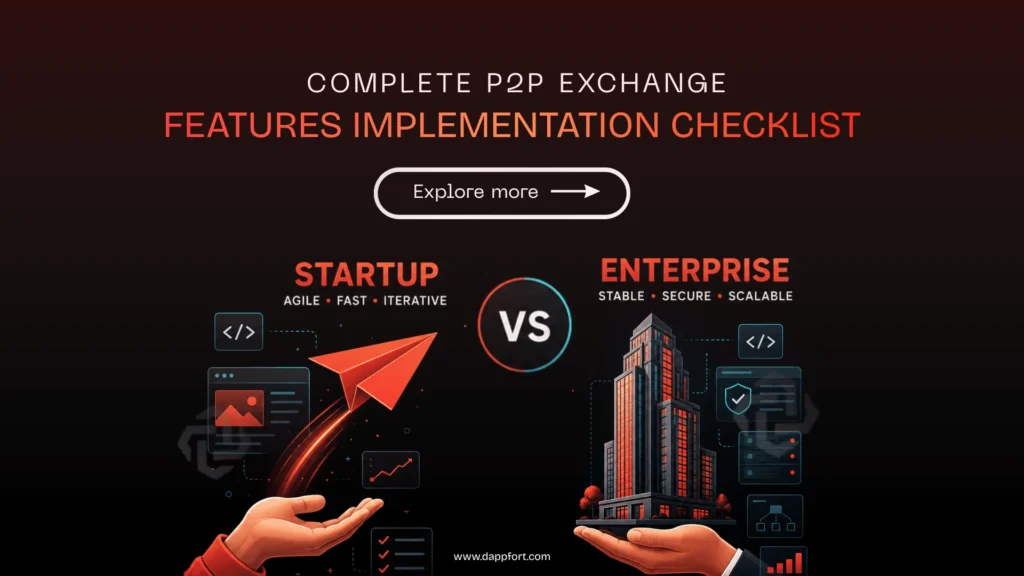
Compare Startup vs Enterprise P2P Exchange Features
| Feature Category | Startup MVP | Enterprise Platform |
| P2P Escrow | Basic custodial | Smart contract escrow |
| Multicurrency Wallets | Multi-coin | Multi-chain + MPC |
| KYC/AML | Standard verification | Enterprise AML systems |
| Liquidity models | Shared liquidity | Institutional liquidity |
| Security | Basic 2FA | AI fraud monitoring |
| Analytics | Basic reporting | AI-powered analytics |
| Support | Manual moderation | Automated dispute systems |
| Scalability | Moderate traffic | High-frequency trading |
Advanced Enterprise P2P exchange Features
Enterprise crypto exchanges require far more than standard trading functionality to scale successfully. Modern platforms increasingly rely on advanced exchange features such as AI fraud detection, behavioral analytics, institutional liquidity tools, and multi-layer security systems to improve scalability and platform protection.
Advanced P2P exchange features such as AI fraud detection, cross-chain asset swaps, DeFi integration, NFT marketplace support, and institutional trading tools help platforms improve security, expand user engagement, and support high-volume trading operations. These capabilities are becoming critical for exchanges targeting long-term growth and enterprise adoption.
360 degree AI Powered Fraud Detection
Machine learning systems can detect: Suspicious accounts, Fake identities, Chargeback risks, Bot activity.
Cross-Chain Swaps with Multiple Networks
Users increasingly demand seamless asset swaps between networks.
DeFi Integration
Modern P2P exchanges integrate: Staking, Yield farming, Liquidity pools, DeFi wallets
NFT Marketplace Integration
Some exchanges now support NFT trading ecosystems.
Institutional Trading Tools
Enterprise platforms often include: OTC desks, Margin trading, Futures trading, API trading access
White Label vs Custom P2P Exchange Features Flexibility
Speed-to-market has become one of the biggest competitive advantages in the crypto industry.
That’s why many startups choose white-label exchange solutions to launch quickly, while enterprises invest in custom-built platforms for scalability and feature ownership.
For example: A startup founder wants to launch a crypto exchange fast. An enterprise wants complete control over every feature, workflow, and security layer. Both goals are valid — but they require very different development approaches. Understanding the difference between white-label and custom P2P exchange solutions can save businesses from expensive technical and operational mistakes later.
In this white label vs custom P2P exchange comparison blog, we explore the trade-offs between cost, flexibility, customization, and long-term growth potential.
Best AI-Powered P2P Exchange Software Features for Startups & Enterprises:
The success of a crypto startup often depends on the technology powering its exchange platform.
The best P2P exchange software helps startups launch faster, handle growing user demand, improve security, and simplify compliance management. Features like scalable infrastructure, High-speed architecture, smart contract automation, multi-region support, and wallet interoperability are no longer optional — they’re essential for building a competitive crypto exchange.
In current AI era, Startups need AI features that accelerate growth efficiently, while enterprise exchanges require advanced intelligence systems capable of managing security, compliance, liquidity, and institutional-scale operations. Hence, the best P2P crypto exchange software should provide AI-powered solutions wherever required for business automation for startups and enterprises.
Startup AI Features
Startups typically focus on:
- Faster deployment
- Cost-efficient automation
- Essential fraud prevention
- Basic scalability
- Lightweight compliance tools
The goal is rapid market entry with manageable operational costs.
Enterprise AI features
Enterprise exchanges prioritize:
- Advanced automation
- Predictive analytics
- Institutional-grade security
- Large-scale fraud prevention
- Multi-region operational intelligence
- Deep compliance monitoring
The focus shifts toward scalability, risk reduction, and long-term infrastructure ownership.
Launch your P2P exchange faster with the right features
How Much Does It Cost to Build These Features?
Building a successful P2P crypto exchange starts with understanding where development costs actually come from. Factors such as security infrastructure, blockchain integrations, compliance systems, liquidity management, AI fraud detection, and mobile app development all play a major role in project pricing. This detailed P2P exchange pricing guide explains the major cost factors businesses should evaluate before investing in a scalable exchange platform.
Final Thoughts
The demand for secure and scalable P2P crypto exchanges will continue increasing as global crypto adoption expands. Choosing the right P2P crypto exchange features is essential for building a scalable, secure, and competitive trading platform. From escrow protection and wallet integration to smart contracts and compliance automation, every feature contributes to user trust and operational efficiency.
Businesses planning to launch enterprise-grade peer-to-peer trading platforms should prioritize scalability, security architecture, liquidity systems, and regulatory compliance from the beginning. Businesses that implement the right feature architecture today will be better positioned to dominate the future of peer-to-peer crypto trading.
Visit Dappfort Web3 developers to explore advanced digital transformation services for startups.
Turn your P2P crypto exchange idea into a scalable trading platform with right features
Frequently Asked Questions
-
What is a P2P crypto exchange?
A P2P crypto exchange allows users to trade cryptocurrencies directly with each other without relying on a traditional intermediary.
-
What are the most important P2P crypto exchange features?
Escrow systems, wallet integration, security architecture, KYC verification, fiat payments, merchant systems, and smart contract automation are among the most critical features.
-
Why is escrow important in P2P exchanges?
Escrow protects buyers and sellers by securely locking crypto assets until payment verification is completed.
-
Can P2P exchanges support fiat payments?
Yes. Modern P2P exchanges support bank transfers, UPI, mobile banking, and regional payment gateways.
-
Which blockchain is best for P2P exchange development?
Ethereum, BNB Chain, Tron, Polygon, and Solana are widely used depending on scalability and transaction fee requirements.
-
Are custom P2P exchanges better than white-label solutions?
Custom exchanges provide better scalability, ownership, advanced security, and unique feature flexibility.
-
Can startups launch a P2P exchange with an MVP?
Yes. Many startups begin with core features like escrow, wallets, KYC, and payment gateways before scaling to enterprise infrastructure.